
Certified for the diet, filtered out of it
+163% sessions
The certifications were on the pack and in the bullets, and none of them were in the structured fields that drive the filters this audience shops with. Nothing else about the listings mattered until that changed.

At a glance
- Category
- Specialty Diets
- Marketplaces
- US, UK
- Revenue at start
- $71k / month
- Catalog
- 19 certified SKUs across three diets
- Engagement
- Listing SEO + PPC
- Timeframe
- 13 months
Results
The challenge
A shopper on a restricted diet does not browse and then read labels. They set the filter first and shop only what survives it, because everything that does not is not a worse option — it is inedible. That makes the filter the entire top of the funnel for this category.
The brand held three certifications, printed them on every pack and repeated them in every bullet. But the structured attribute fields that feed those filters were empty across all nineteen SKUs, so the catalog was excluded from the only browse path its audience uses. This is not something advertising can compensate for: a filtered browse page is a refinement of a category, not a search term you can bid on. The brand was paying to reach people through search while being invisible on the route they actually take.
Our approach
We filled in the fields, then rebuilt everything downstream of them.
- Attribute completion across the catalog — diet type, allergen declarations and free-from flags populated for every SKU and every variation child, not just the parents.
- Browse node placement reviewed so each product sits in the diet subcategory its shoppers refine within, rather than in a generic food node.
- Certification promoted to the first thing the listing says, in the title and the opening frame, because this shopper screens before they read.
- Campaigns rebuilt on diet-qualified terms, where intent is unambiguous and cost per click is a fraction of the category head.
How we worked
- 1
Filter audit
Each of the three diet filters applied as a shopper would; not one of the nineteen SKUs appeared in any of them.
- 2
Certification evidence assembled
Certificates collected per SKU so every attribute claimed could be substantiated if challenged.
- 3
Attribute rollout
Diet, allergen and free-from fields populated catalog-wide, parents and children alike, then re-checked against live filters after indexing.
- 4
Browse node correction
Products moved into the diet subcategories where the refinements live, which changed which filters were even offered alongside them.
- 5
Listing and campaign rework
Titles and opening images rebuilt around the certification; exact-match campaigns opened on diet-qualified terms.
Inside the ad account
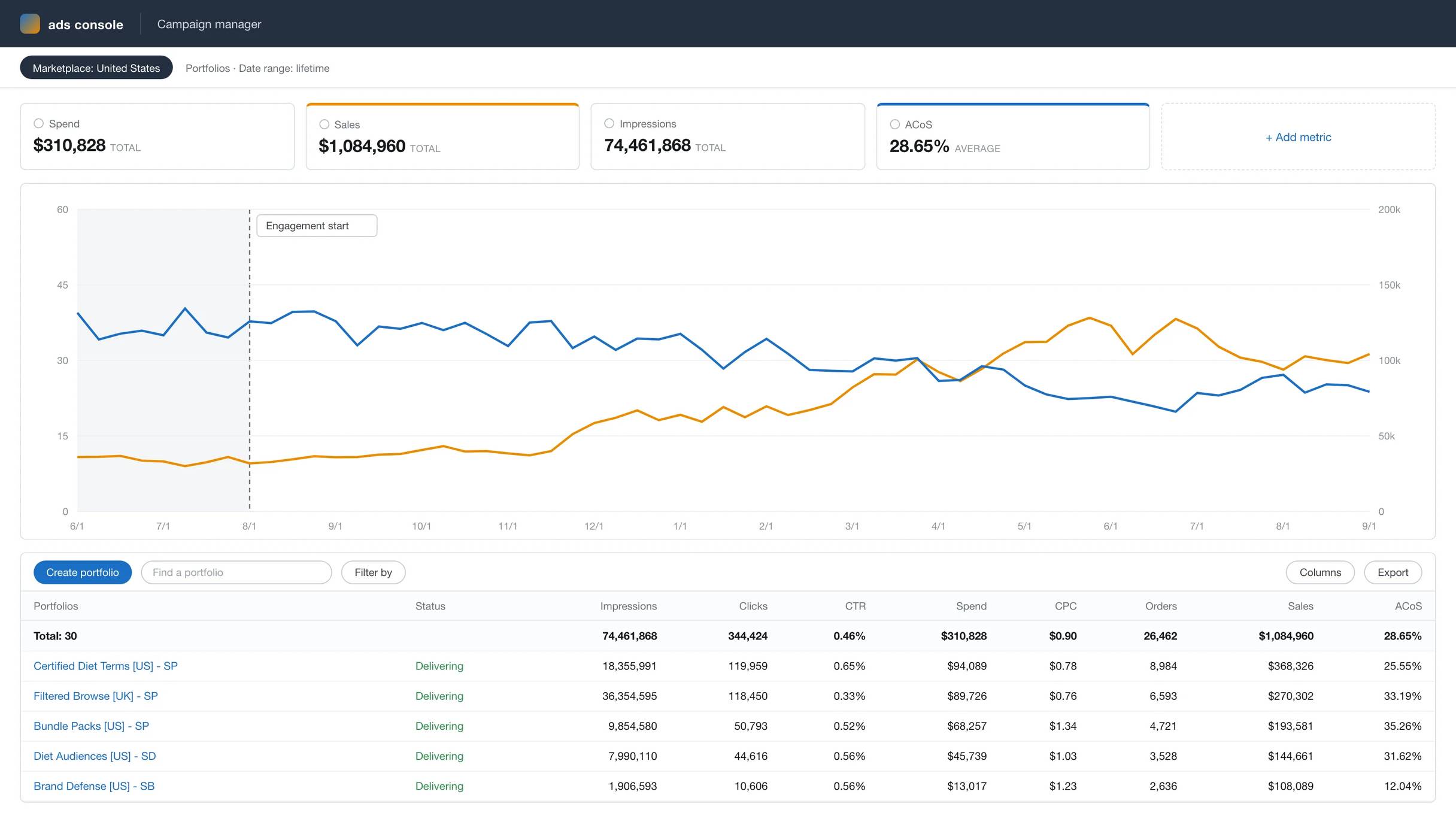
Anonymized account view, rebuilt from the figures reported above: ad sales growing from $32k to $114k a month while ACoS falls from 37% to 24% across the 13-month engagement.
The results
Sessions grew from 38k to 100k a month and revenue more than tripled, from a small base, over thirteen months in which the products themselves did not change at all.
Every one of the nineteen SKUs now appears in all three diet filters, against none at the start. The demand for these products flows down a browse path the brand had been excluded from by empty form fields. Conversion also rose 35%, because traffic that has already filtered for the diet arrives pre-qualified in a way search traffic rarely is.
“We had the certificates framed in the office and not typed into the listing. That gap cost us a third of the category.”
Services we delivered
Related case studies




Ready to scale your Amazon brand?
Talk to a senior strategist and leave with a growth plan for your store — no obligation.