
Shoppers search monitors as a spec string, not as a product
+44% sessions
Nobody types “good gaming monitor”. They type a size, a resolution and a refresh rate in that order — and the brand's listings led with a marketing name.

At a glance
- Category
- Monitors
- Marketplaces
- US, DE
- Revenue at start
- $338k / month
- Catalog
- 19 panels across 6 sizes
- Engagement
- Listing SEO + PPC
- Timeframe
- 7 months
Results
The challenge
Monitor demand arrives as a three-part filter. A shopper has decided on a size, usually a resolution, and — if they game or edit — a refresh rate, and they type those three things into the search box in a fairly predictable order. The result is a dense lattice of specific, high-volume, moderately competitive search strings, each of which is effectively its own small market.
The brand's titles opened with a product family name and a four-character model code, and buried the specs at the end where they truncate on a phone. Two panels in the line were positioned against each other in the copy but were identical on every spec a shopper filters by, so they split the same traffic and neither ranked. Advertising was compensating for all of it: a 33% ACoS spent almost entirely on generic category terms, because those were the only ones the listings were relevant enough to win.
Our approach
We treated the spec lattice as the map and put each panel on exactly one square of it.
- One primary spec intersection per SKU — size, resolution and refresh rate — assigned so no two panels compete for the same string.
- Titles rewritten spec-first after the brand name — the style guide fixes the brand at the front, so the three numbers people search sit immediately behind it and the family name and model code move to the end.
- Secondary specs in structured fields and bullets — panel type, ports, adjustment range — for the narrower searches that follow the main one.
- Campaigns built one per intersection, so bids and budgets follow each square's real competition instead of a single category average.
- Two overlapping panels separated on use case and price, which freed both from splitting one audience.
Inside the ad account
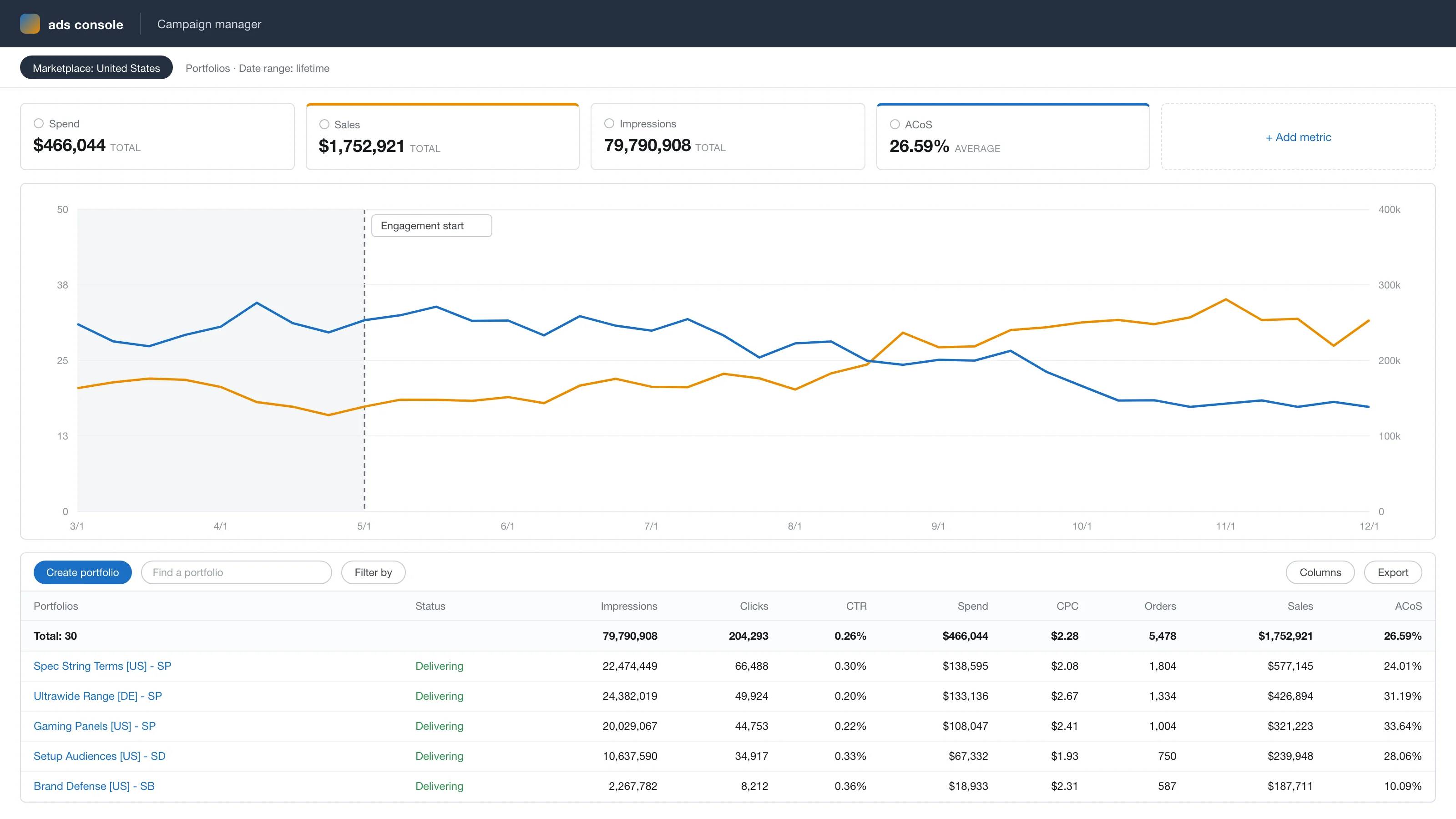
Anonymized account view, rebuilt from the figures reported above: ad sales growing from $152k to $252k a month while ACoS falls from 33% to 19% across the 7-month engagement.
The results
Sessions grew from 84k to 121k a month, and sixteen of nineteen panels now sit on page one of the spec string they were assigned.
ACoS fell fourteen points, mostly because advertising stopped doing work the listing should have been doing: the generic category terms that had carried the account were replaced with intersections where the listing is genuinely the best answer, and those convert at roughly twice the rate. Nothing in the hardware line changed — the same nineteen panels, described the way the category searches for them.
“Two years went into naming these monitors. Not one customer has ever typed one of those names.”
Services we delivered
Related case studies


Ready to scale your Amazon brand?
Talk to a senior strategist and leave with a growth plan for your store — no obligation.