
Cutting returns on a dock by helping shoppers identify their own port
Return rate 23% → 8%
Almost a quarter of docking stations came back, and virtually none of them were faulty. Buyers could not tell which port their laptop had, and the listing assumed they could.
At a glance
- Category
- Computer Accessories
- Marketplaces
- US
- Revenue at start
- $187k / month gross
- Problem
- 23% returns, 84% of them “not compatible”
- Engagement
- Creative & content + account management
- Timeframe
- 5 months
Results
The challenge
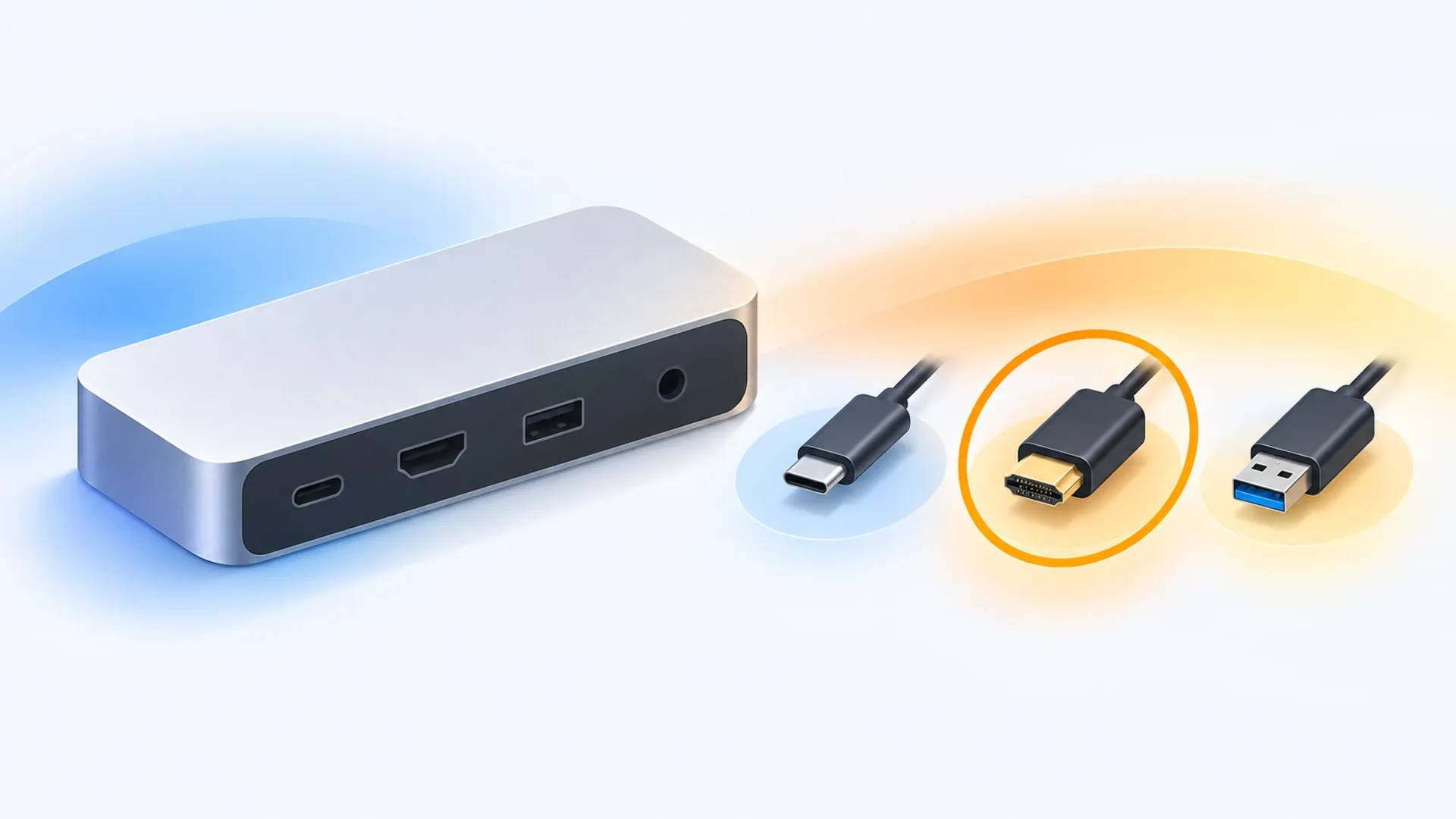
Nearly a quarter of units shipped came back, and the warehouse's own testing cleared almost all of them: the docks worked. The customer had bought the wrong one, because deciding correctly required knowing whether the port on the side of their laptop carried video — a distinction invisible to the eye, undocumented on most machines, and completely opaque to a shopper who simply sees a small oval socket.
The listing made this worse by writing for people who already knew. It stated a protocol and a bandwidth figure, which is precise, correct and useless to the buyer who needs it most. The cost compounded: returns on a bulky item eat the margin twice, and the reviews they generated described the product as broken when the real failure was a decision the page had let the customer get wrong.
Our approach
We moved the compatibility check to before the purchase, and made it something a non-technical buyer can perform.
- A self-identification sequence in the image stack — look here, count these marks, this is your port — placed in frames two and three where mobile shoppers look.
- Symbols rather than protocol names, since the marking printed next to the socket is what the shopper can actually see.
- An explicit “this will not work with” frame, which disqualifies the wrong buyer faster than any feature list qualifies the right one.
- The three most common laptop families named in the bullets as worked examples, so the abstract check has something concrete to land on.
- Answered questions folded back into the page — each recurring question became a frame rather than a reply.
How we worked
- 1
Return teardown
Six months of returns tested on receipt: 84% were functional units returned as incompatible.
- 2
Question mining
Eleven months of customer questions clustered; two questions accounted for more than half of them.
- 3
Image stack rebuilt
Frames two and three replaced with the visual port check; the feature grid moved to frame six.
- 4
Disqualification frame added
An explicit incompatibility panel, deliberately placed before the feature content.
- 5
Twelve-week watch
Return reasons re-coded weekly; one remaining cluster produced a third frame in month four.
Inside the ad account
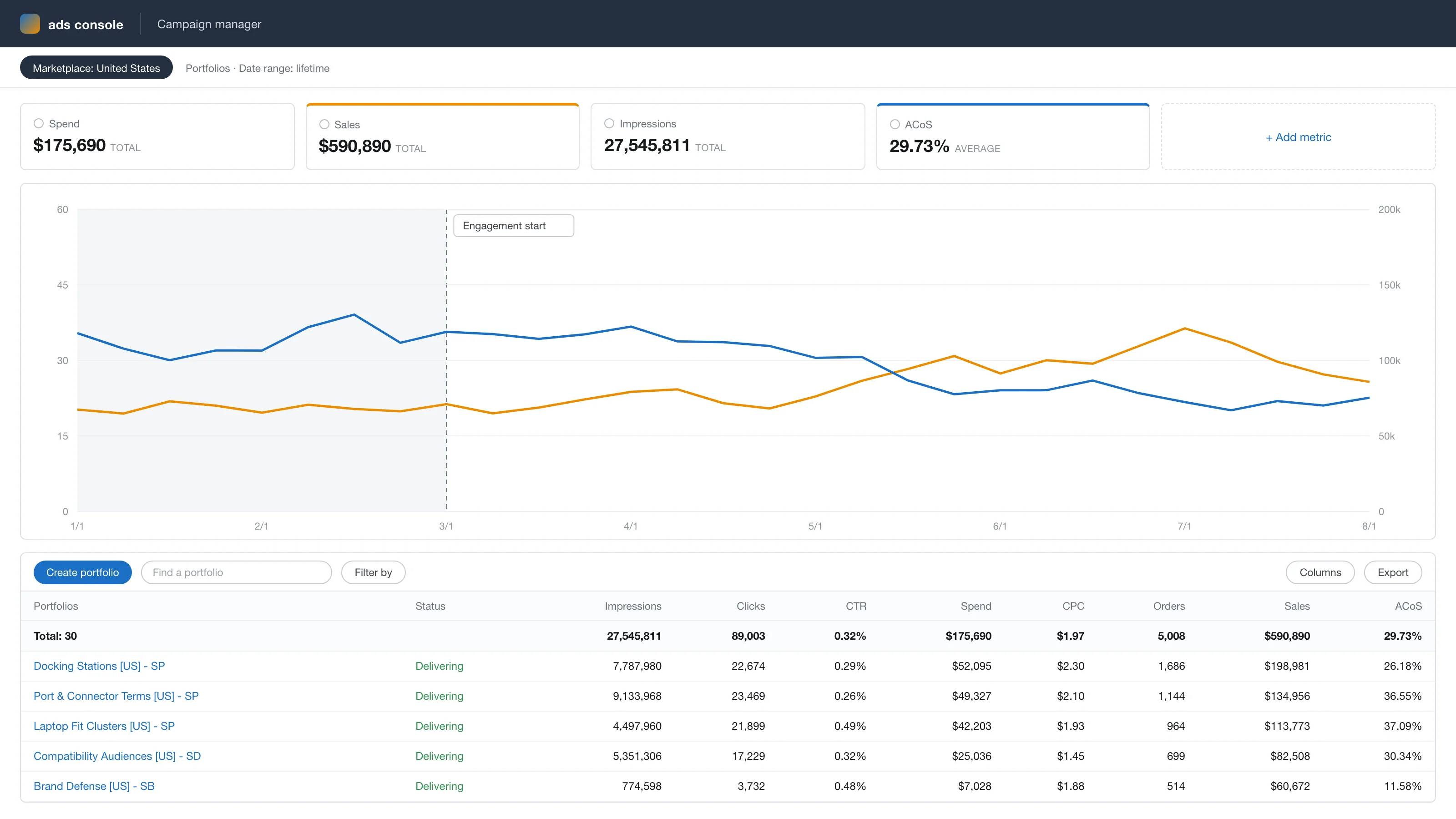
Anonymized account view, rebuilt from the figures reported above: ad sales growing from $65k to $109k a month while ACoS falls from 35% to 23% across the 5-month engagement.
The results
Returns fell from 23% to 8%, which in a category with heavy units and a restocking cost is worth more than the sales growth beside it.
Net revenue rose 73% while gross orders grew far less — the difference is simply orders that stayed sold. The rating recovered from 3.7 to 4.1 as reviews stopped describing a working product as defective, and pre-purchase questions fell from sixty a week to seventeen — the cleanest evidence that the page now answers what shoppers were asking.
“The copy was written for engineers. The buyer just wants two screens to work.”
Services we delivered
Related case studies



Ready to scale your Amazon brand?
Talk to a senior strategist and leave with a growth plan for your store — no obligation.