
Publishing an absorbency scale the whole category could be measured against
Wrong-level orders down 71%
Every brand in the category invents its own absorbency labels, so shoppers cannot compare and frequently buy the wrong one. We published a measured scale and mapped competitors onto it.
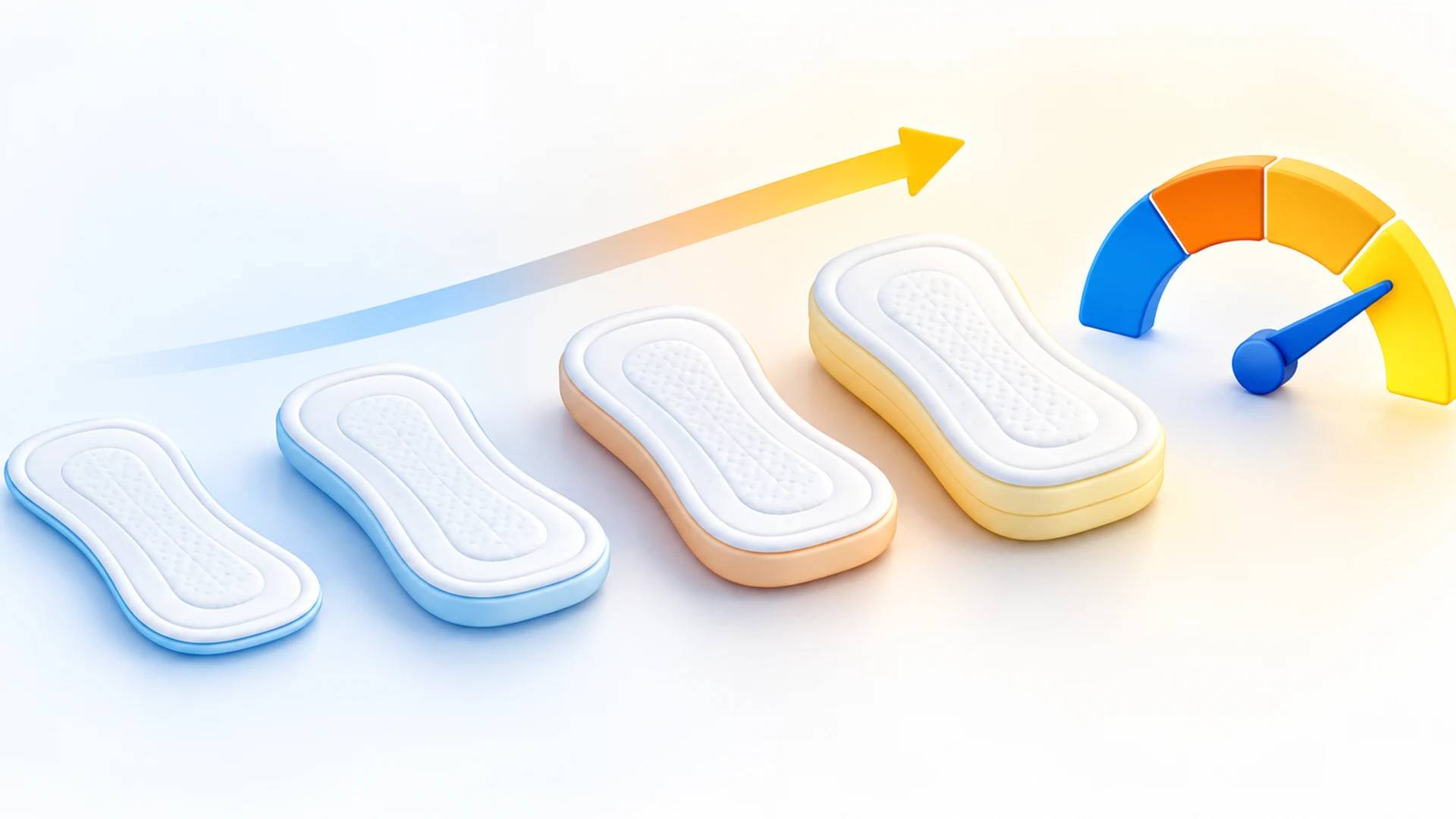
At a glance
- Category
- Sanitary & Incontinence
- Marketplaces
- US
- Revenue at start
- $109k / month
- Problem
- 22% of orders were the wrong absorbency level
- Engagement
- Listing SEO + creative
- Timeframe
- 9 months
Results
The challenge
“Moderate”, “maximum”, “overnight”, “ultimate” — every manufacturer uses different words for overlapping levels of absorbency, and none of them mean anything measurable. A shopper switching brands has no way to find the equivalent of what they were using, so they guess, and roughly one in five guesses wrong.
For this brand the wrong guess was expensive twice over. The product came back, and the review usually blamed the product for leaking rather than the shopper for buying a level below what they needed. The rating sat at 4.0 for a product that performs well when correctly matched.
Our approach
We built the comparison the category refuses to provide.
- A measured scale — absorbency tested in milliliters under a consistent method and stated as a number, not an adjective.
- Equivalence published where it is allowed — the conversion chart lives in the brand's own store and off-Amazon content, since a detail page cannot name a competitor; the listing carries the brand's own number and the method behind it.
- The scale carried across every listing and the brand store, making it the brand's structural asset rather than a one-page graphic.
- Guidance for the first-time buyer — a short self-assessment for shoppers who have never bought in the category and have no prior product to convert from.
Inside the ad account
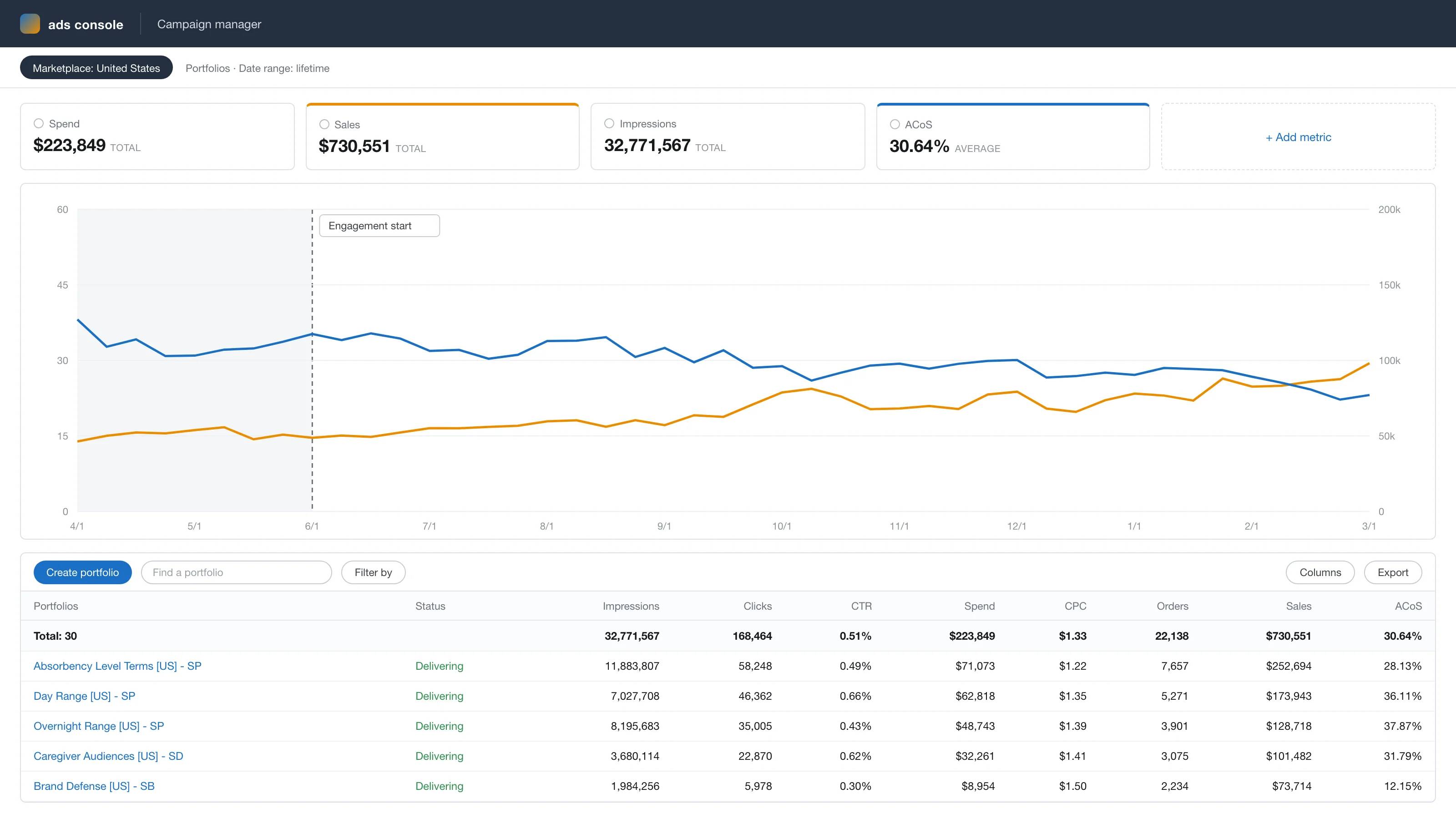
Anonymized account view, rebuilt from the figures reported above: ad sales growing from $49k to $84k a month while ACoS falls from 34% to 23% across the 9-month engagement.
The results
Wrong-level orders fell from 22% to 6.4%, and revenue grew 72%.
The repeat rate almost doubled, which is the number that matters in a consumable category: a customer who gets the right level first time stays. The rating recovered to 4.5 as the leak reviews — which had really been mismatch reviews — stopped arriving. The scale has since been quoted by shoppers in reviews of other brands, which is the cheapest category authority this brand has ever bought.
“Nobody in this category will tell you what their words mean. Publishing a number was almost aggressive — and it's the reason people switch to us.”
Services we delivered
Related case studies
Ready to scale your Amazon brand?
Talk to a senior strategist and leave with a growth plan for your store — no obligation.