
Three stars for a good game bought by the wrong table
Rating 3.9 → 4.2
A strategy game was being bought for family game night and rated accordingly. Stating complexity, player count and playtime honestly cost the brand some sales and saved its rating.

At a glance
- Category
- Games & Puzzles
- Marketplaces
- US
- Revenue at start
- $98k / month
- Problem
- 27% of reviews at 3 stars or below, nearly all about difficulty
- Engagement
- Listing SEO + creative
- Timeframe
- 6 months
Results
The challenge
The negative reviews were not complaints about the game. They were complaints about the evening: “rules took an hour to explain”, “way too complicated for our kids”, “we only had three players and it barely works”. Every one of those is a mismatch between who bought it and who it was built for.
The listing had caused the mismatch. The main image showed a bright box, the copy promised “fun for the whole family”, and the fields that would have warned anyone — best player count, teaching time, actual length of a game — were either blank or optimistically wide (2–8 players, 30–90 minutes). A hobby game sold as a party game collects three-star reviews from people who would have loved a different product.
Our approach
We let the game be difficult, on the page, before purchase.
- A complexity statement in the image stack — where the game sits on the weight scale hobbyists already use, shown as a frame rather than a claim.
- Honest ranges — best at four players, playable at three, roughly seventy minutes once everyone knows the rules.
- Teaching time called out explicitly, because that is the single most common surprise in the negative reviews.
- Keywords aimed at the right shopper — strategy, hobby and gateway-plus phrasings instead of the family-game-night head terms the listing had been chasing.
Inside the ad account
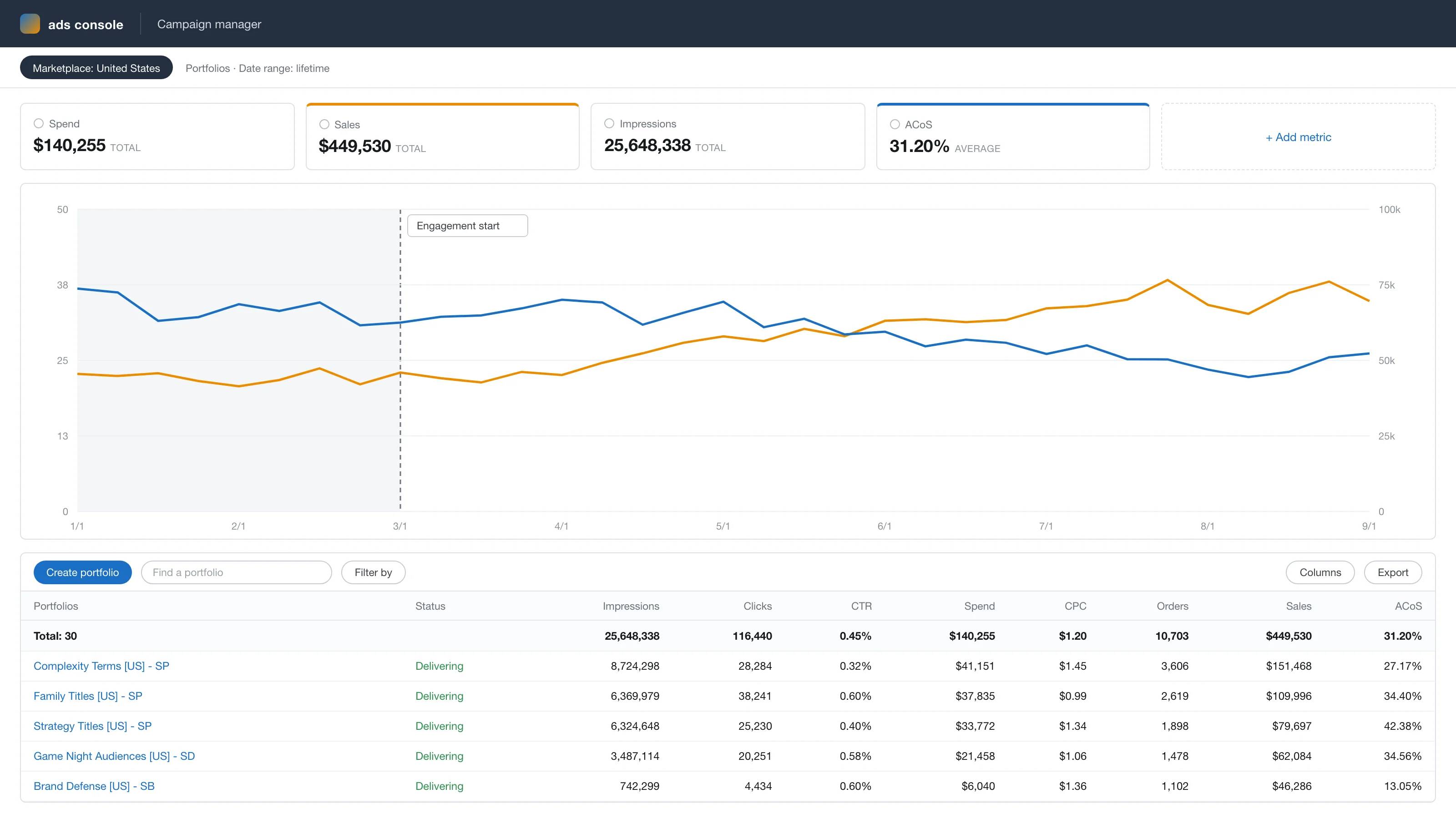
Anonymized account view, rebuilt from the figures reported above: ad sales growing from $44k to $73k a month while ACoS falls from 33% to 24% across the 6-month engagement.
The results
The rating climbed from 3.9 to 4.2, and revenue grew 35% despite the listing now actively discouraging part of its former audience.
That is the whole mechanism: the shoppers who were warned off were the ones who would have returned it or rated it three stars, and their absence is what let the rating recover. Conversion rose anyway, because a hobby buyer who reads an accurate complexity rating converts at a far higher rate than a parent who is not sure what they are looking at.
“We were scared to write 'takes forty minutes to teach' on the box page. It turned out to be the sentence that sold it to the right people.”
Services we delivered
Related case studies



Ready to scale your Amazon brand?
Talk to a senior strategist and leave with a growth plan for your store — no obligation.