
When reviews arrive four months after the sale
Rating 3.8 → 4.2
RV owners buy in spring and fit in summer, so the brand was reading feedback about a product version it had already replaced — and the customer's problem surfaced long after anyone could help.
At a glance
- Category
- RV Parts & Accessories
- Marketplaces
- US
- Revenue at start
- $131k / month
- Observed lag
- Median 17 weeks between delivery and the first support contact
- Engagement
- Full account management + creative
- Timeframe
- 10 months
Results
The challenge
An RV part is bought when the owner is planning and fitted when the owner is travelling, and the gap between those two moments was a median of seventeen weeks. That lag corrupted every feedback loop in the business.
The product team read reviews describing a revision they had discontinued two versions earlier. Support received a fitting question long after the buyer had given up, improvised a solution and written about it. And because the return window had closed months before the part was ever opened, a customer with a problem had exactly one option left — a one-star review, written from a campsite, with a tone that reflected a ruined trip rather than a faulty component.
Our approach
We stopped waiting for the customer to reach the product and went to meet them.
- A delivery-day unboxing prompt — a short check that takes four minutes and verifies contents and condition while the order can still be resolved simply.
- Support timed to installation, not to purchase — the insert in the box carries a season-opening check, and the brand's own email list does the reminding, because Amazon's buyer messaging is for order-related contact and not for a note three months later.
- Pre-trip content on the listing — what to check and what to carry as a spare, which pulls the first contact with the product forward by weeks.
- The revision dated on the insert and in the support record, so a complaint arriving four months later can be placed against the version that actually shipped — which a review on its own can never tell you.
Inside the ad account
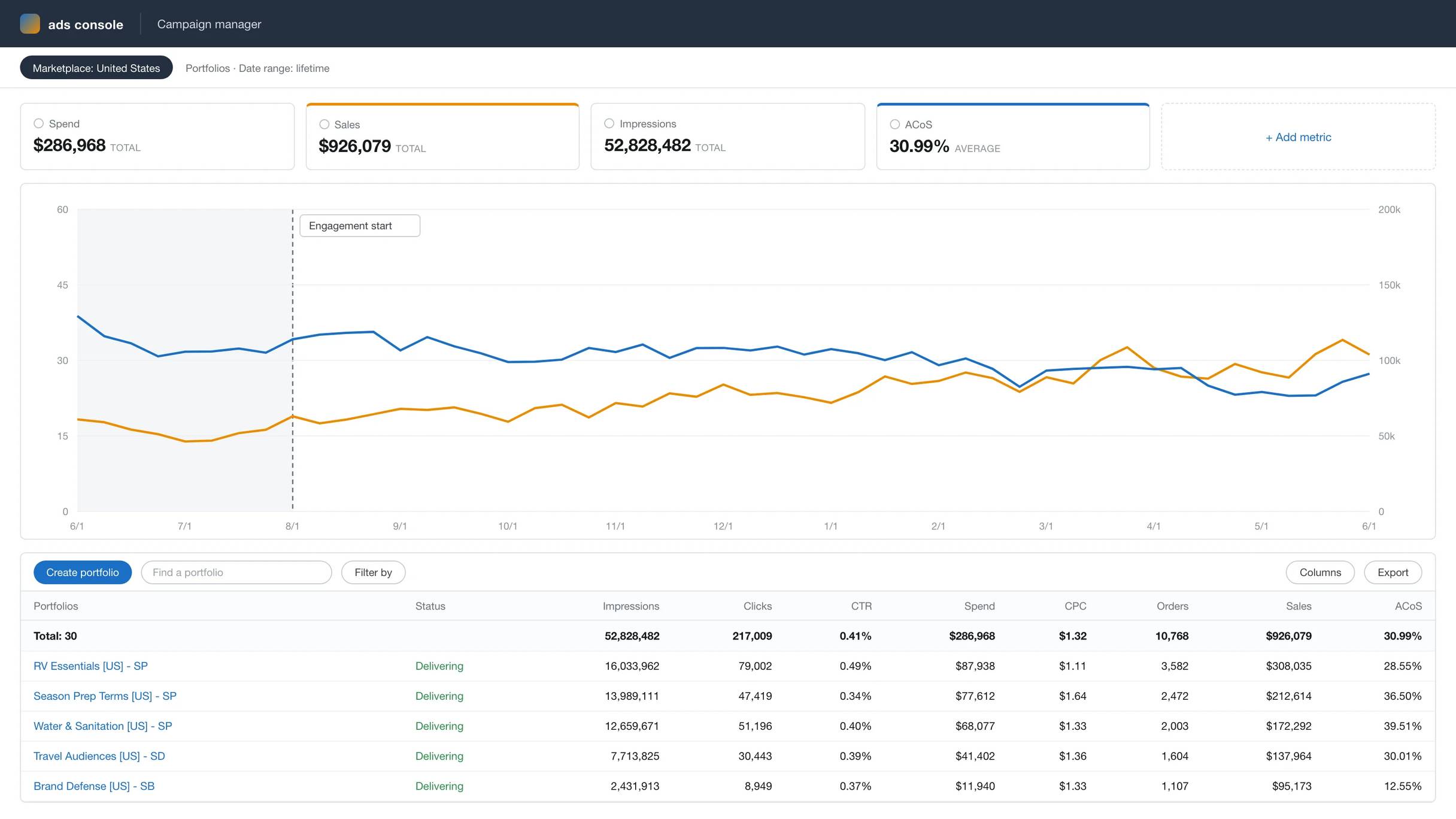
Anonymized account view, rebuilt from the figures reported above: ad sales growing from $59k to $102k a month while ACoS falls from 35% to 24% across the 10-month engagement.
The results
The average rating on the top ten ASINs rose from 3.8 to 4.2, and the median lag between delivery and the first contact with the brand fell from seventeen weeks to five.
Returns came down by half, because problems now surface while a return is still possible and a replacement still solves the situation. Revenue grew 73% — largely a consequence of the rating, which in this category is the difference between appearing in a considered comparison and being skipped. The product never changed; what changed was when the brand met the customer.
“Our worst reviews were written by people we could have helped in March, from a campsite in July.”
Services we delivered
Related case studies

Ready to scale your Amazon brand?
Talk to a senior strategist and leave with a growth plan for your store — no obligation.