
Selling the two hours of labor, not just the steel
Revenue +112% on a pre-assembled option
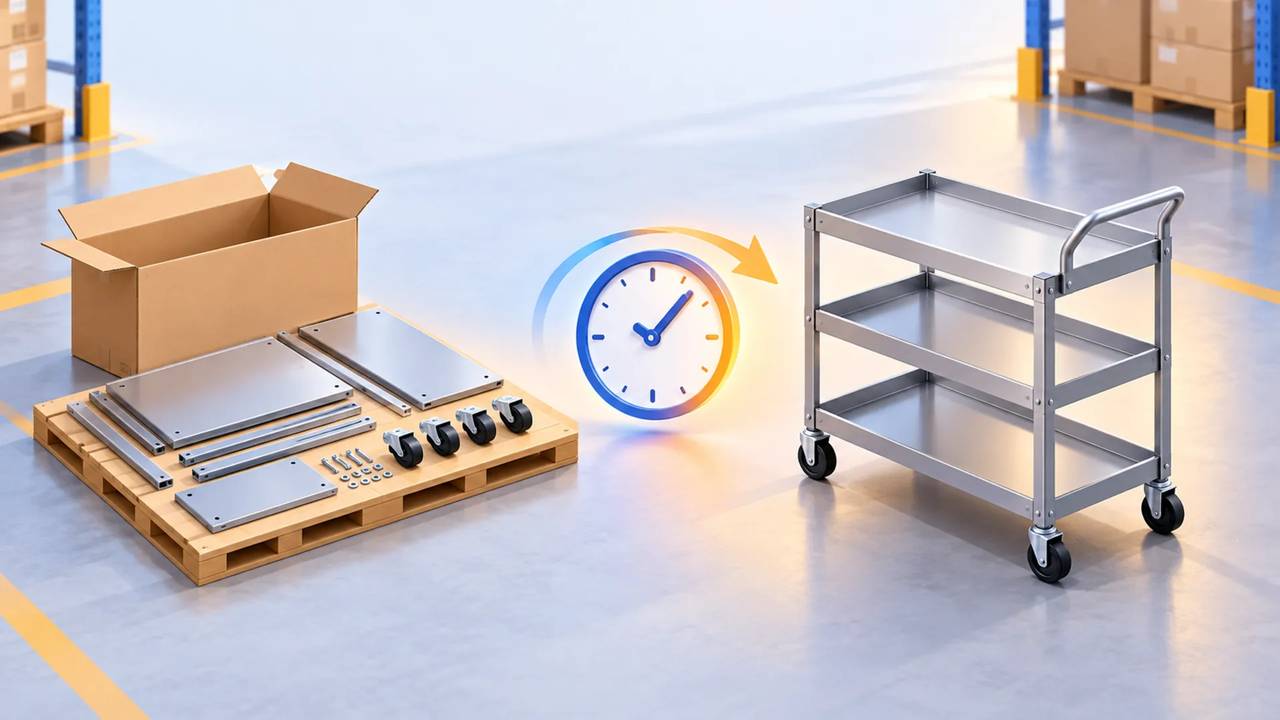
The brand's shelving and carts shipped flat and took a warehouse team most of a morning to build. Adding a pre-assembled option changed which buyer could say yes.
At a glance
- Category
- Material Handling
- Marketplaces
- US
- Revenue at start
- $243k / month
- Products
- Carts, racks and shelving shipped flat
- Engagement
- Full account management + PPC
- Timeframe
- 13 months
Results
The challenge
A $310 cart that takes two people ninety minutes to assemble does not cost $310. It costs $310 plus roughly $90 of paid labor, plus the two hours of a shift when it is unavailable, plus whatever happens when a step in the instructions is misread and a shelf ends up on backwards.
None of that appeared in the price comparison, but all of it appeared in the decision. Facilities buyers with a crew to spare bought happily; everyone else — small operations, replacement purchases needed the same day, anyone whose people were already busy — bought from a local supplier who delivered the thing built. The brand read this as a price problem and had discounted twice, which did nothing, because the obstacle was never the number on the listing.
Our approach
We put the hidden cost on the page and then sold a version without it.
- A pre-assembled variant on the six highest-volume SKUs, priced at a premium that is visibly less than the labor it replaces.
- The labor named on the listing — assembly time and crew size for the flat-pack option, stated plainly rather than hidden in a downloadable manual.
- The pre-assembled option made the advertised hero, since it converts the buyers the flat pack could never reach.
- Freight and delivery handled explicitly, because a built cart ships differently and an unclear delivery promise would undo the entire argument.
Timeline
Prove it
- Assembly time measured properly across six SKUs
- Pre-assembled variant piloted on two carts
- Premium set against measured labor cost
Roll out
- Variant extended to all six hero SKUs
- Freight terms rebuilt for built units
- Advertising moved onto the pre-assembled option
Consolidate
- Pre-assembled reaches 41% of units
- Returns down as assembly errors disappear
- Average order value up 58%
Inside the ad account
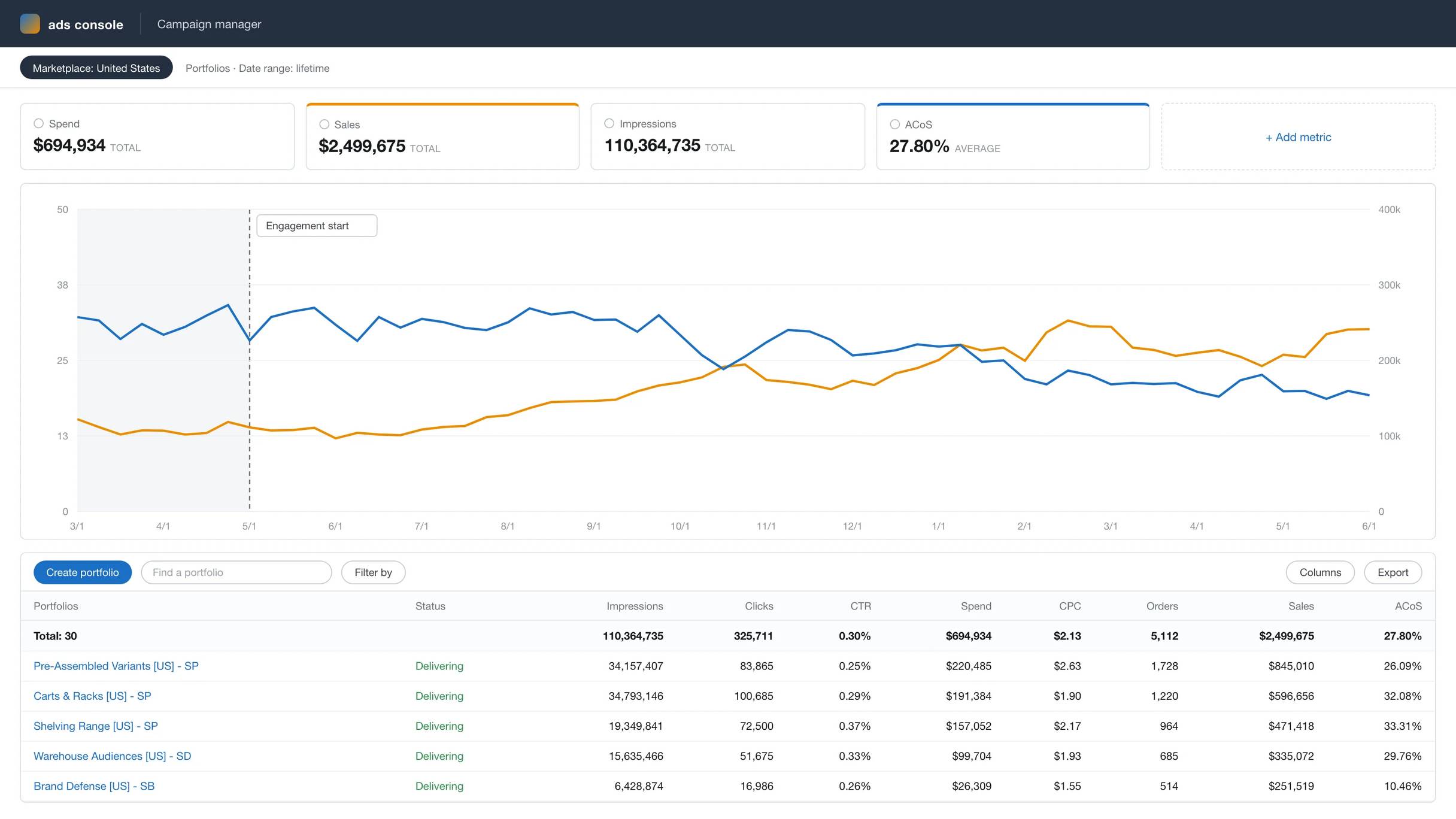
Anonymized account view, rebuilt from the figures reported above: ad sales growing from $109k to $232k a month while ACoS falls from 32% to 21% across the 13-month engagement.
The results
Revenue rose 112% to $515k a month, with 41% of units now leaving as pre-assembled.
Returns more than halved, because a meaningful share of them had been assembly damage and missing hardware rather than anything wrong with the product. Average order value rose 58% — partly the premium itself, partly because a buyer who is not budgeting two hours of labor per unit orders more units.
“We discounted twice trying to fix a problem that was ninety minutes of a technician's time, not thirty dollars.”
Services we delivered
Related case studies


Ready to scale your Amazon brand?
Talk to a senior strategist and leave with a growth plan for your store — no obligation.