
Selling refills to people who own someone else's pail
Refill revenue +315%
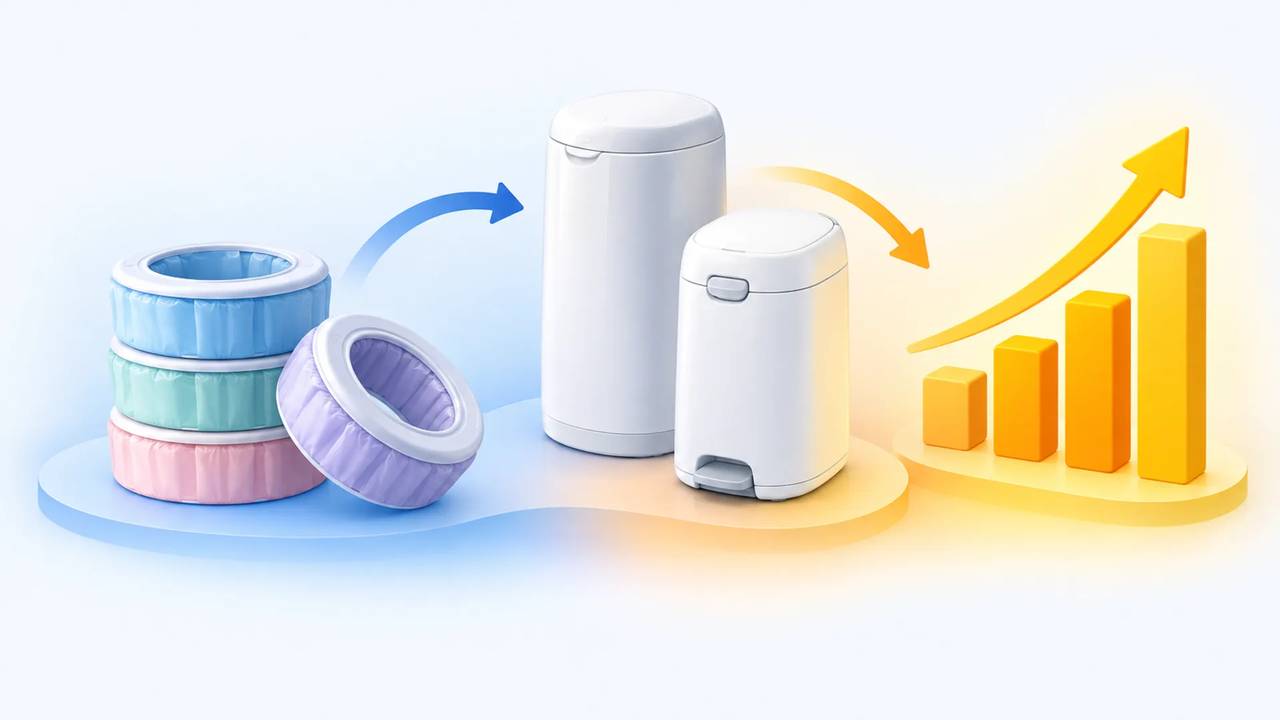
A diapering brand's refill cassettes physically fit two rival systems, and nobody knew. Making compatibility the headline turned a competitor's installed base into a recurring revenue line.
At a glance
- Category
- Diapering
- Marketplaces
- US
- Revenue at start
- $96k / month
- Refill share of revenue
- 14% at start
- Engagement
- Listing SEO + PPC
- Timeframe
- 7 months
Results
The challenge
The economics of the category are decided after the hardware sale. A pail is bought once; its refills are bought every three weeks for two years, and that annuity belongs to whoever the owner searches for when the cassette runs out.
This brand had sold a modest number of pails and was competing for new hardware sales against two much larger systems. What it had never used was the fact that its refill cassettes fit both of those systems — a genuine engineering property that appeared nowhere in the bullets, the images or the compatibility attributes. Every month, tens of thousands of searches for those competitors' refills ran past a product that would have worked perfectly, because the listing was written as though the only possible customer was someone who already owned this brand's pail.
Our approach
We stopped selling the pail and started selling the refill to everyone it fits.
- Compatibility as the first bullet, plus the listing's structured compatibility attributes — a plain factual “fits” claim naming the systems the cassette seats in, while competitor brand names stay out of the backend search terms, where they are not permitted.
- A fit-check visual — the cassette shown seated in each system, because a compatibility claim in text is not believed in this category.
- Campaigns targeting competitor refill terms and their product pages, where the buyer's intent is already “I need a refill today”.
- Subscription enrollment on the refill ASINs, so a captured owner stops searching at all.
Inside the ad account
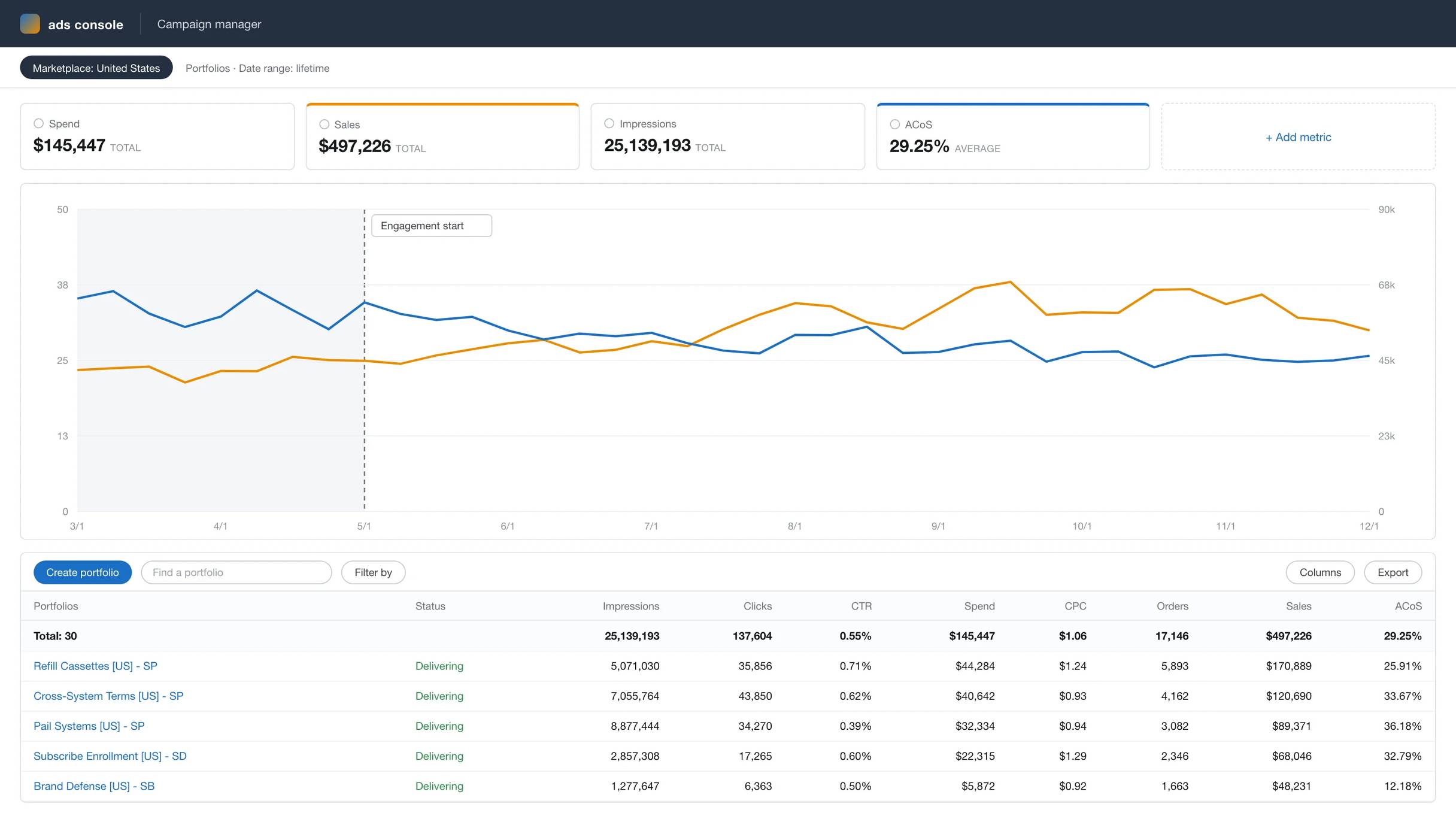
Anonymized account view, rebuilt from the figures reported above: the refill campaigns lifting ad sales while ACoS fell eleven points.
The results
Refill revenue grew from $13k to $54k a month, and total revenue rose 43% while hardware sales stayed roughly flat.
Blended margin improved eleven points as a direct consequence: refills carry far better margin than pails, and the brand now earns them from households that bought a competitor's hardware. The strategic effect is larger than the number — the brand no longer has to win the expensive hardware purchase to earn the recurring one, which is a much cheaper way to grow in a category where the installed base was already built by someone else.
“We'd been fighting to sell pails. The cassette in our warehouse already fit half the pails in the country.”
Services we delivered
Related case studies


Ready to scale your Amazon brand?
Talk to a senior strategist and leave with a growth plan for your store — no obligation.