
Winning an urgent purchase on delivery speed, not on price
Next-day coverage 38% → 91%
A parent buying children's fever medicine at 9pm is not comparing prices — they are comparing delivery dates. The brand's inventory sat in two warehouses and lost on the only axis that mattered.

At a glance
- Category
- Baby & Child Care
- Marketplaces
- US
- Revenue at start
- $132k / month
- Purchase context
- Urgent — symptom-driven, same-evening decision
- Engagement
- Full account management + PPC
- Timeframe
- 8 months
Results
The challenge
This category's purchases are urgent. A child develops a fever in the evening and the parent buys whatever arrives first — delivery date beats brand, and it certainly beats a dollar of price difference.
The brand's inventory was consolidated into two fulfillment centers because that is simpler to manage, which meant only 38% of US shoppers saw a next-day promise. In the other 62% of the country the listing showed a two-to-three day date and lost to competitors who were nowhere near as well reviewed. The account's national conversion rate looked healthy, and nothing in Seller Central breaks a conversion rate down by where the shopper lives — so the loss was invisible in reporting and only surfaced when we started checking the delivery date the listing was actually showing.
Our approach
We stopped treating fulfillment as an operations detail and started treating it as the offer.
- Coverage measured, not assumed — a standing panel of ZIP-code checks recording the delivery date the listing offered, tracked against conversion week by week, which is what justified the inventory spend.
- Distributed inbound placement — shipments split across regional inbound locations instead of consolidated into two, with Amazon Warehousing and Distribution feeding the replenishment, accepting slightly more complexity for far broader coverage.
- Advertising paced behind the coverage build — no bid buys a delivery date, so budget stepped up as coverage did instead of paying for clicks the offer could not close.
- A seasonal pre-build — cold and flu stock inbounded eight weeks ahead of the illness curve, so the network had it distributed before demand arrived rather than after.
Inside the ad account
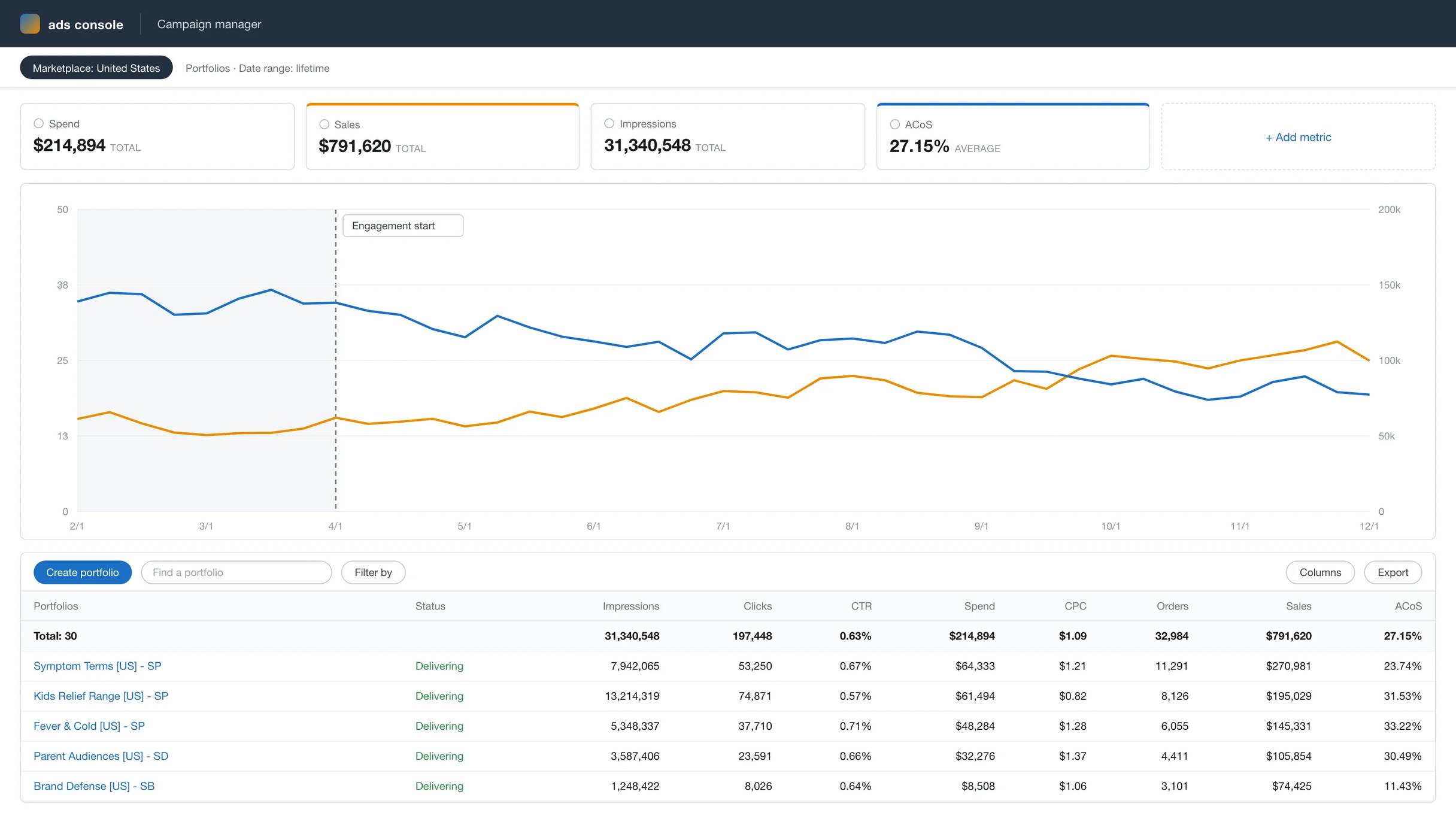
Anonymized account view, rebuilt from the figures reported above: ad sales growing from $59k to $103k a month while ACoS falls from 33% to 21% across the 8-month engagement.
The results
Next-day coverage went from 38% to 91% of US shoppers, and revenue grew 73%.
The mechanism is visible in the sequence: conversion tracked the coverage build step for step, ending 63% higher with no change to the listing, the price or the reviews. Weeks of cover actually fell 20%, because spreading stock across regions turned out to need less safety cover than piling it into two locations and shipping long distances.
“We'd been arguing about price with a competitor who was simply arriving a day earlier.”
Services we delivered
Related case studies




Ready to scale your Amazon brand?
Talk to a senior strategist and leave with a growth plan for your store — no obligation.