
Selling to the person who already owns a cheap welder
Upgrade segment = 44% of revenue
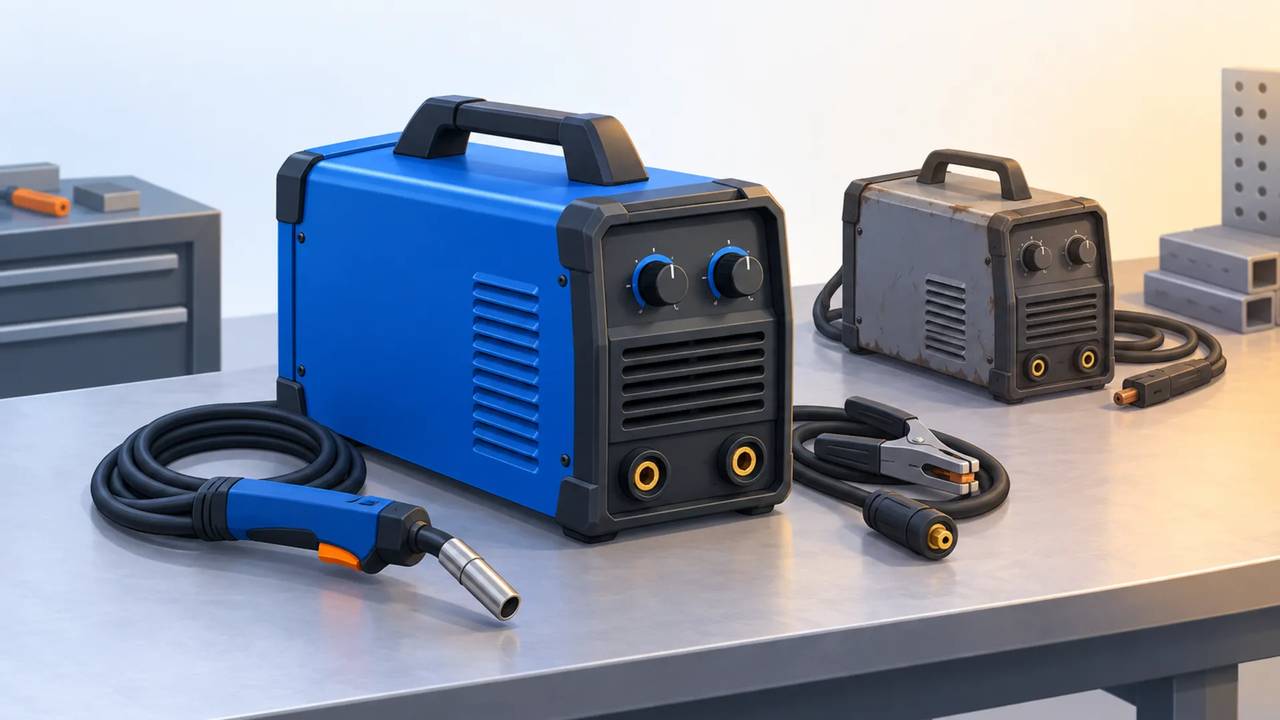
The brand's machines were too serious for a first purchase and too affordable for a professional shop. The buyer who fit exactly was the hobbyist who had outgrown their starter machine — and nobody was talking to them.
At a glance
- Category
- Welding & Soldering
- Marketplaces
- US, CA
- Revenue at start
- $189k / month
- Position
- $620 machines, above entry, below professional
- Engagement
- DSP + creative & content
- Timeframe
- 12 months
Results
The challenge
The catalog sat in an awkward middle. A first-time buyer choosing between a $180 machine and this one almost always chose the $180 machine — the extra capability means nothing to somebody who has never struck an arc. A professional fabrication shop, meanwhile, buys equipment that costs several times more and comes with a service contract.
The brand had been advertising into both of those dead ends for years. What it had not identified as a segment at all was the person eighteen months into the hobby, whose starter machine now visibly limits what they can build — inconsistent arcs on thicker stock, a duty cycle that stops them halfway through a job. That buyer knows exactly what they need, has a specific list of frustrations, and is the only person for whom this price is obviously correct.
Our approach
We built the whole proposition around the second machine.
- The segment defined by behavior — audiences built from prior purchases of entry-level machines, consumables and accessories that indicate an owner rather than a shopper.
- Creative written as an upgrade, naming the specific limits of a starter machine and showing the work that becomes possible past them.
- DSP as the primary channel, because the trigger is ownership history rather than a search someone is running today.
- A trade-up narrative in A+, which positions the first machine as a sensible beginning rather than a mistake — this buyer does not want to be told they wasted their money.
How we worked
- 1
Segment definition
Purchase and browsing signals used to build an audience of existing entry-machine owners rather than category shoppers.
- 2
Listening to the frustration
Reviews of competing entry machines mined for the exact limits owners complain about after a year of use.
- 3
Creative for the upgrade moment
Image and video content built around those specific limits and the projects that clear them.
- 4
DSP rollout
Prospecting concentrated on the ownership audience, with search budget cut on the first-time-buyer terms that never converted.
- 5
Measuring the segment
Upgrade-audience revenue tracked separately from month four so the reallocation could be judged on its own numbers.
Inside the ad account
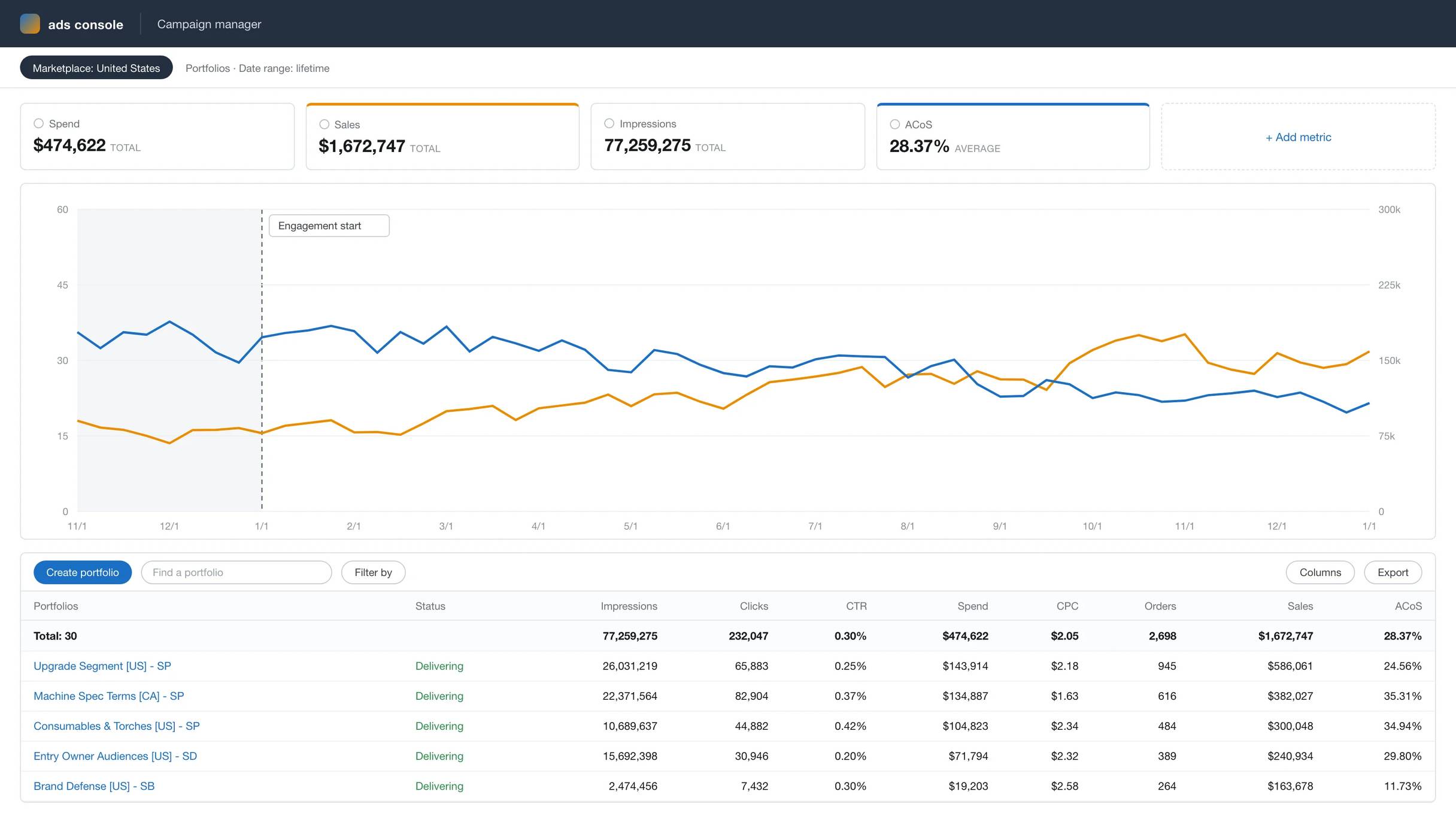
Anonymized account view, rebuilt from the figures reported above: ad sales growing from $85k to $156k a month while ACoS falls from 35% to 22% across the 12-month engagement.
The results
The upgrade segment went from not existing as a concept to 44% of revenue, and total revenue grew 83%.
Acquisition cost fell 40% because a buyer who already owns a machine needs no education about what welding is — they need one specific reason to replace what they have. New-to-brand orders rose 81% — against roughly 1,100 orders a month in total — on an advertising budget that grew by less than a tenth, since the money previously spent persuading first-timers to overspend is now spent on people already convinced.
“We'd been pitching to beginners who wanted something cheaper and shops that wanted something bigger. Our actual customer already owned a welder and hated it.”
Services we delivered
Related case studies
Ready to scale your Amazon brand?
Talk to a senior strategist and leave with a growth plan for your store — no obligation.