
The return wave that arrived ten days after the big game
Post-event returns 21% → 8%
A projector brand's best sales week every year was followed by its worst return week. The customers were not dissatisfied — they had bought the product for a single evening.

At a glance
- Category
- TV & Video
- Marketplaces
- US
- Revenue at start
- $246k / month
- Pattern
- Sales peak in event week, returns peak 10 days later
- Engagement
- Full account management + PPC
- Timeframe
- 5 months
Results
The challenge
Every year the account posted a spectacular event week and then quietly gave a fifth of it back. The returns clustered between day nine and day fourteen, comfortably inside the return window and comfortably after the event, and the stated reasons were vague in a way that manufacturing defects never are.
The brand had been treating this as a quality problem and had twice paid for inspection batches that found nothing. The real pattern was in the order data: the event-week cohort bought the largest and most expensive models in the range, at a rate the rest of the year never approached, and returned them at three times the baseline. They had bought a one-night product. Each of those returns also cost a unit that could not be sold as new and, often, a mediocre review from someone who never intended to keep it.
Our approach
We stopped competing for the buyer who was always going to send it back.
- Promotional weight moved forward — the discount pulled to three weeks before the event, which reaches the planner rather than the impulse buyer.
- Advertising reduced, not raised, in the final 72 hours on the flagship models, where the return cohort concentrated.
- Qualification in the copy — setup time, room conditions and what the projector needs to be good, stated plainly enough that a one-evening buyer self-selects out.
- A genuinely event-appropriate offer — the mid-range model promoted for gatherings, which returns at the baseline rate and protects the flagship's rating.
Inside the ad account
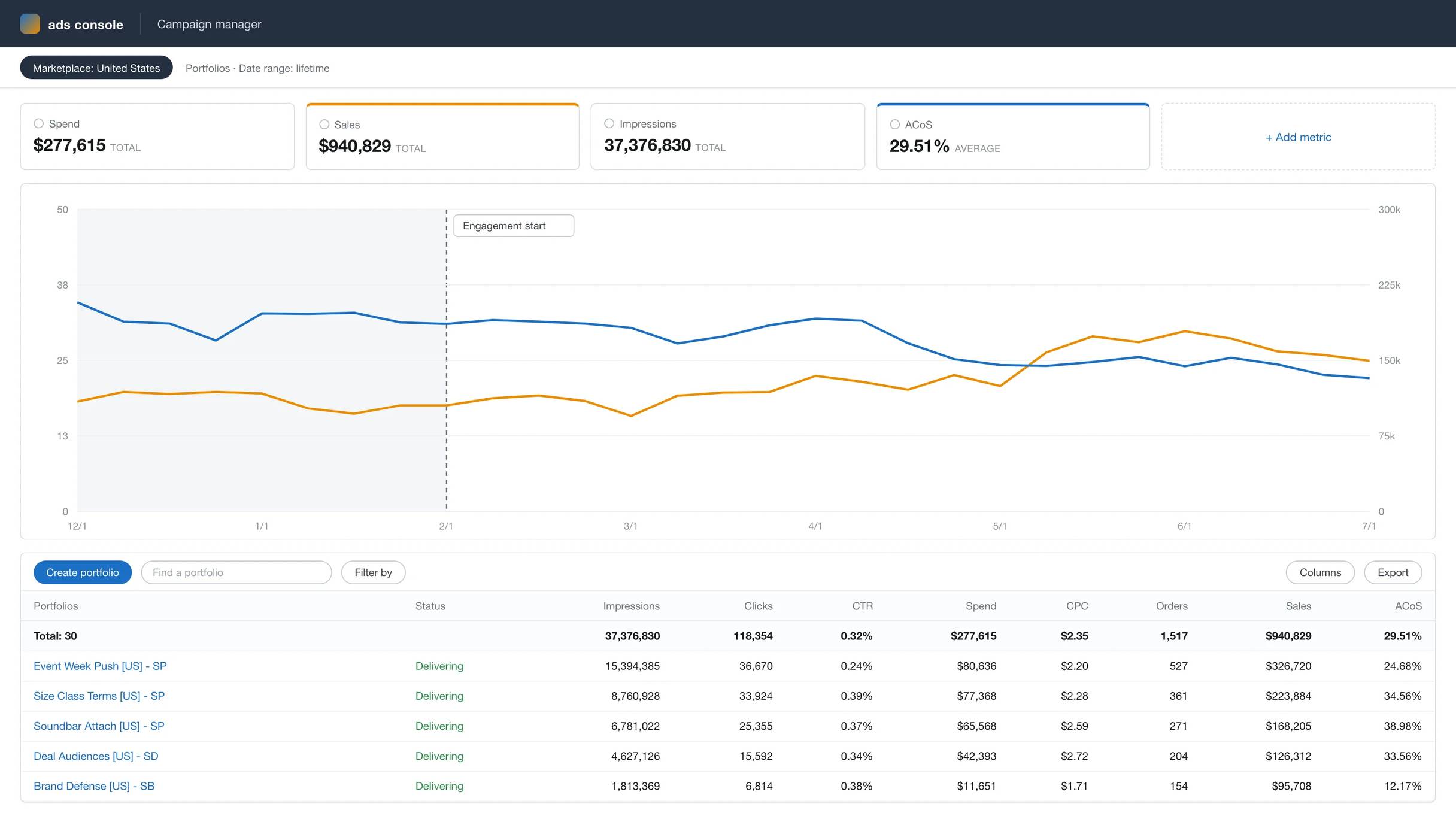
Anonymized account view, rebuilt from the figures reported above: ad sales growing from $111k to $171k a month while ACoS falls from 32% to 22% across the 5-month engagement.
The results
Returns from the event cohort fell from 21% to 8%, and net revenue for the month rose 18% even though gross orders in the peak week dropped 12%.
That trade is the whole point: a unit sold and returned costs shipping twice, cannot be resold at full price, and frequently leaves a three-star review behind. Selling twelve percent fewer projectors to people who intended to keep them was worth substantially more than the volume it gave up, and the rating rose four tenths as a side effect.
“We'd been protecting a number that was partly fictional. Our best week was inflated by people who were always going to send it back.”
Services we delivered
Related case studies



Ready to scale your Amazon brand?
Talk to a senior strategist and leave with a growth plan for your store — no obligation.