
Three label refreshes, three new ASINs, one lost customer base
Repeat purchase rate 21% → 47%
Every packaging update produced a brand-new listing, which reset the reviews, the ranking and — the part nobody had costed — the reorder prompt in every existing customer's account.
At a glance
- Category
- Pantry Staples
- Marketplaces
- US
- Revenue at start
- $164k / month
- Purchase cycle
- Replenished every 5–8 weeks
- History
- 3 packaging refreshes, 3 new listings
- Engagement
- Full account management + listing SEO
- Timeframe
- 9 months
Results
The challenge
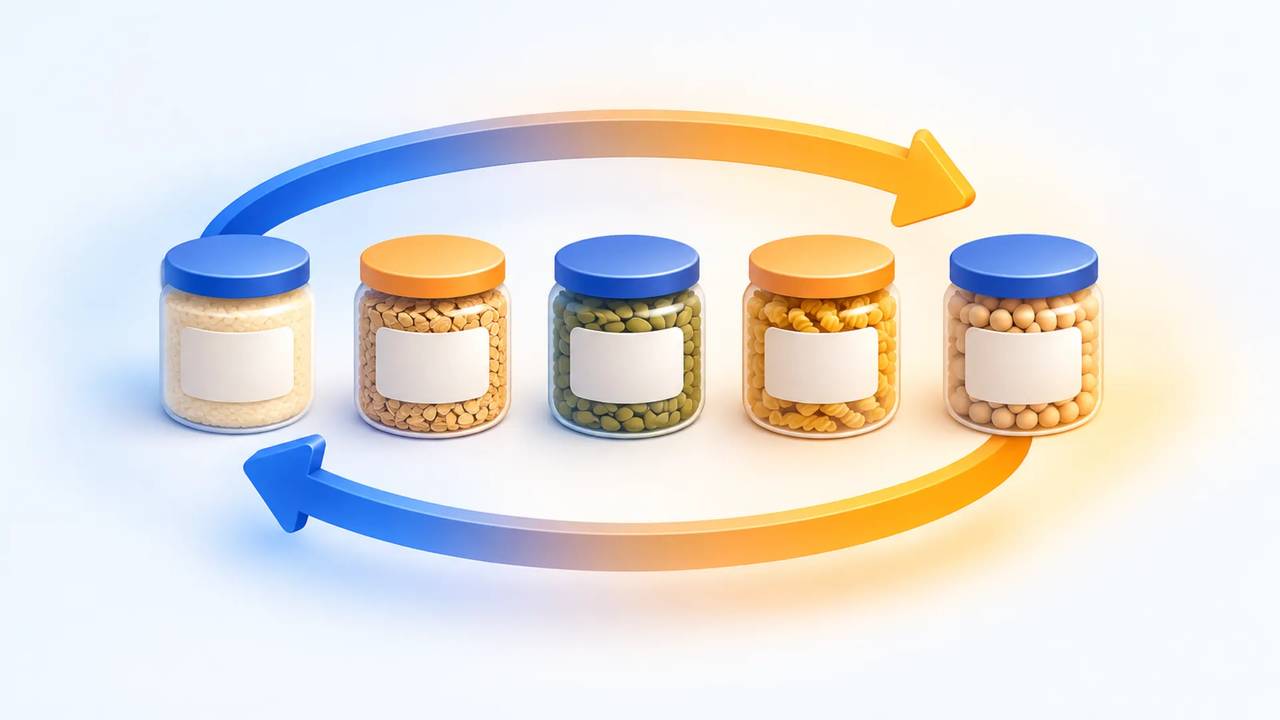
A pantry staple earns most of its money from people who have already bought it. They do not search — they reorder, from a purchase history, a saved list or a reorder prompt that points at one specific listing. The brand had broken that link three times in two years, because each time the label was redesigned the team created a fresh listing and quietly retired the old one.
The visible cost was obvious enough: reviews back to zero, ranking back to nothing, and eighteen months of accumulated relevance discarded for a design change the product itself did not undergo. The invisible cost was larger. Thousands of customers whose reorder route pointed at a retired listing found it unavailable and, at that moment, were shown a competitor as the alternative. The brand was re-acquiring its own customers twice a year and paying advertising rates to do it.
Our approach
One product, one enduring listing — and a rule about when that is allowed to change.
- A single permanent listing per product, with images, copy and A+ updated in place whenever the packaging changes.
- An internal rule for new listings — a genuine change in size, count or formulation qualifies; a new label does not — agreed with the design and operations teams rather than imposed on them.
- Legacy listings retired deliberately, with their traffic and their remaining stock routed to the surviving one instead of dying quietly.
- Content continuity — the keyword set and backend terms carried forward intact, so accumulated relevance keeps compounding instead of restarting.
Inside the ad account
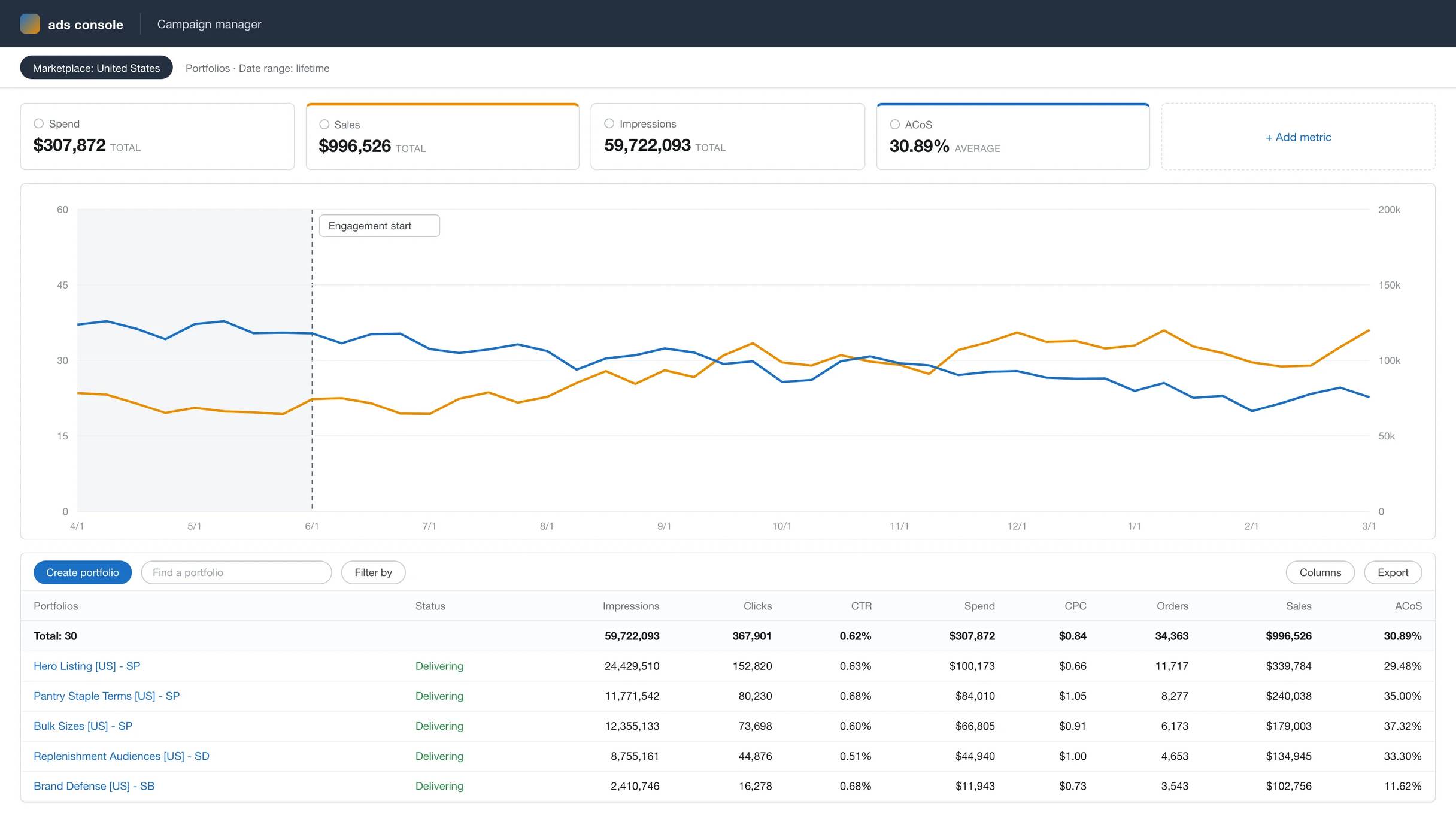
Anonymized account view, rebuilt from the figures reported above: ad sales growing from $74k to $116k a month while ACoS falls from 33% to 22% across the 9-month engagement.
The results
The repeat purchase rate more than doubled, from 21% to 47%, and it did so without a loyalty program, a discount or a single retention email.
The hero listing now carries 2,900 reviews rather than 410 — not because the brand generated more, but because it stopped throwing them away — and the resulting authority took the head term from #23 to #6. Revenue grew 63% on a smaller share of new-customer advertising, which is how a staple is supposed to work: sold once and bought many times.
“Every rebrand felt like a fresh start. It was a fresh start, and that was exactly the problem.”
Services we delivered
Related case studies
Ready to scale your Amazon brand?
Talk to a senior strategist and leave with a growth plan for your store — no obligation.