
Making influencer traffic pay twice with attribution and the referral bonus
External traffic ROI 1.4x → 3.6x
A beauty brand sent thousands of influencer clicks to Amazon every month and could not tell which ones worked. Tagged attribution turned an unmeasurable spend into the account's best-performing channel.
At a glance
- Category
- Beauty & Personal Care
- Marketplaces
- US
- Revenue at start
- $318k / month
- External spend
- $46k / month with influencers, untracked
- Engagement
- Full account management + PPC
- Timeframe
- 9 months
Results
The challenge
The brand worked with thirty-eight influencers and paid most of them a flat fee. Their links went to plain Amazon URLs, so the only evidence of performance was whether the account had a good week — which it always did during a launch, regardless of who posted.
Unmeasured, the spend defaulted to the loudest partners rather than the effective ones. The brand was also leaving money on the table twice over: no attribution meant no brand referral bonus, and no way to tell which posts were producing the sales the ranking was already being built on — so the budget could not be steered toward the content that worked.
Our approach
Measurement first, then reallocation.
- Attribution tags on every partner link, so each post's sessions, conversions and revenue are attributable to a person and a piece of content.
- Brand referral bonus enabled — the rebate Amazon pays on attributed external sales, which the brand had simply never claimed.
- Partner list cut to what works — after four months of data, spend concentrated on eleven partners and the rest ended.
- Landing on the right page — traffic routed to the storefront or the specific ASIN depending on whether the content sold a routine or a product.
How we worked
- 1
Tagging every link
Attribution links issued per partner and per post, retrofitted where partners could update older content.
- 2
Four months of observation
No budget changes while the data accumulated, so the comparison between partners would be honest.
- 3
Referral bonus activation
Attributed sales enrolled in the brand referral bonus, which returns a percentage of each attributed order.
- 4
Portfolio cut
Thirty-eight partners reduced to eleven; the freed budget moved into higher fees for the performers and into paid amplification of their best posts.
- 5
Ranking follow-through
Advertising increased on the ASINs receiving external traffic, so the conversion spike compounded into organic rank.
Inside the ad account
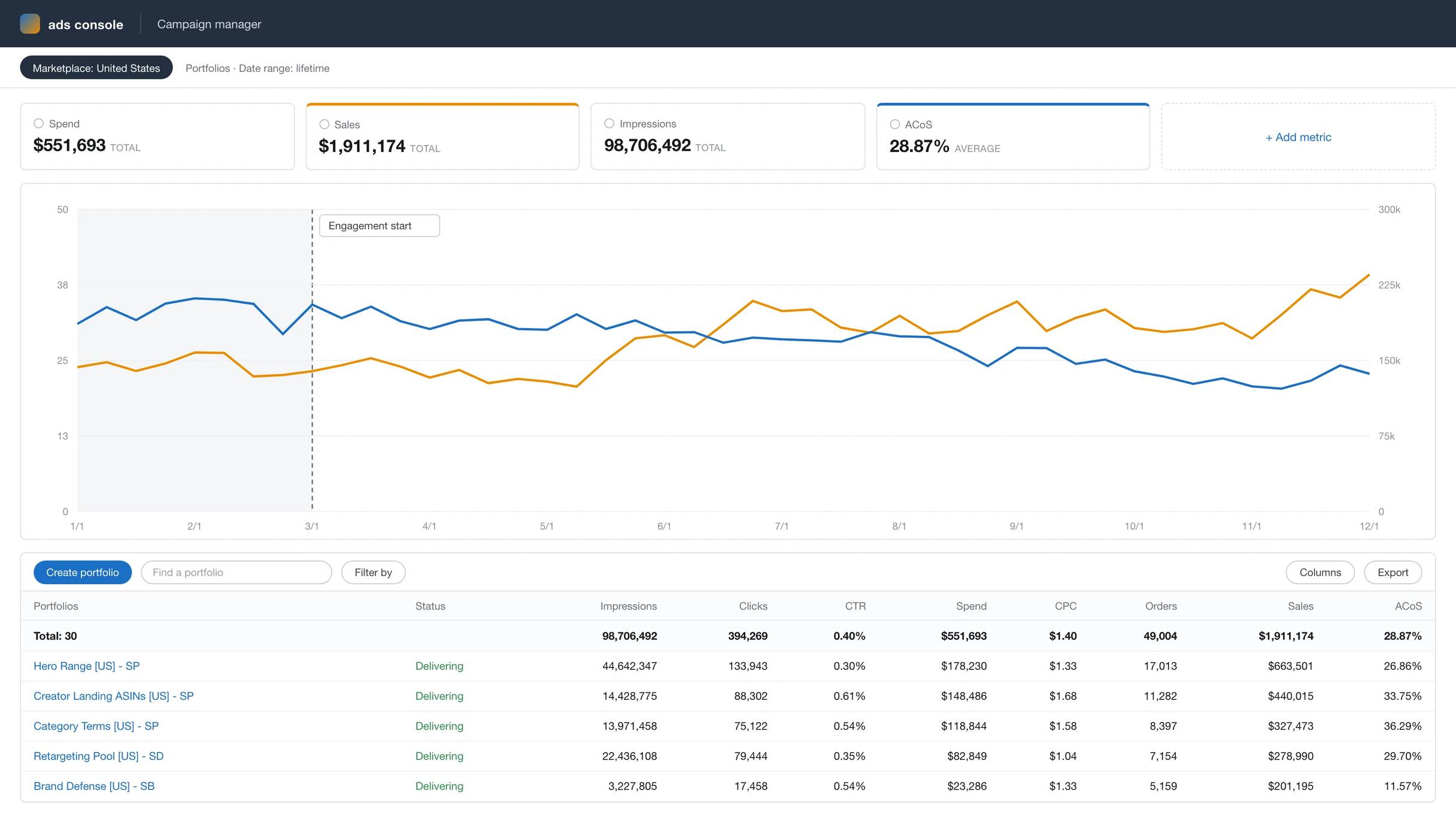
Anonymized account view, rebuilt from the figures reported above: ad sales growing from $143k to $213k a month while ACoS falls from 32% to 22% across the 9-month engagement.
The results
External spend went from unmeasurable to a measured 3.6x, and revenue grew 49% while the influencer budget stayed the same size.
The referral bonus alone now returns about $9.8k a month — ten percent of the $98k of attributed external sales, money that existed the whole time and required only attribution links to claim. Cutting from thirty-eight partners to eleven was the uncomfortable part and the most valuable: three quarters of the spend had been producing almost nothing.
“We had a spreadsheet of thirty-eight relationships and no idea which of them sold anything. Now we have eleven and a number next to each.”
Services we delivered
Related case studies




Ready to scale your Amazon brand?
Talk to a senior strategist and leave with a growth plan for your store — no obligation.