
Moving a bath brand out of the $12 fight and into a $29 offer
Price $12 → $29, revenue +74%
A bath textiles brand was fighting for the bottom of the category against sellers with no brand to protect. We rebuilt the page for a different shopper rather than trying to be the cheapest in the old one.

At a glance
- Category
- Bath
- Marketplaces
- US
- Revenue at start
- $88k / month
- Position at start
- Lowest-priced branded option in the subcategory
- Engagement
- Creative & content + listing SEO
- Timeframe
- 10 months
Results
The challenge
The subcategory's first page was a wall of near-identical listings between $9 and $14, most of them from sellers with no brand, no repeat customers and nothing to lose in a price war. The brand had been competing in that fight for three years by being a dollar cheaper, which meant its margin funded everybody else's growth.
Its actual product was better — heavier GSM, a longer-staple cotton, a real warranty — and none of that appeared above the fold. The listing looked exactly like the $9 one, so it was judged as one.$
Our approach
We stopped arguing about price and changed what the page is about.
- Materials made visible — weight, weave and fiber shown in the first two image frames, where the shopper decides whether this is a different class of product.
- Copy for the replacement buyer — the person replacing thin towels that stopped absorbing, not the person buying the cheapest set on the page.
- Bundle at the new price point — a set that makes the $29 number a complete purchase rather than a more expensive single item.
- Search terms moved up-market — indexed for quality and material modifiers instead of the generic head term where the $9 sellers live.$
How we worked
- 1
Competitive teardown
The nine listings above the brand analyzed frame by frame. All nine sold on price and none showed material detail — the gap was in plain sight.
- 2
Creative rebuild
New photography showing weight, weave and absorbency; first frame changed from a styled bathroom to the product itself.
- 3
Copy and keyword shift
Title and bullets rewritten around material and durability terms with meaningful volume and far less competition.
- 4
Staged price ladder
Price raised in four steps over five months, with conversion checked at each step before the next.
- 5
Bundle launch
A two-towel set introduced at the target price point to anchor the new position.
Inside the ad account
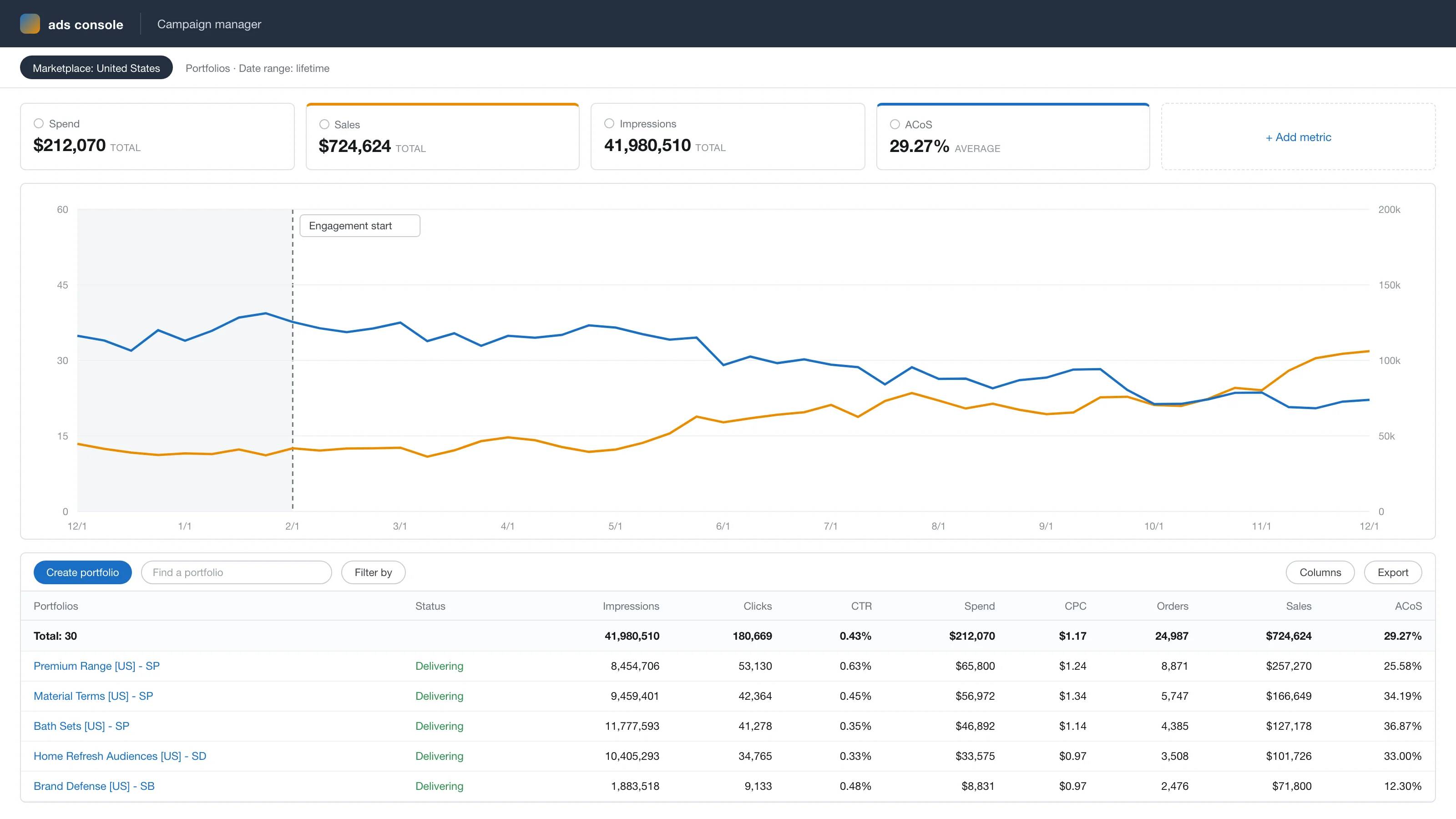
Anonymized account view, rebuilt from the figures reported above: ad sales growing from $40k to $87k a month while ACoS falls from 36% to 23% across the 10-month engagement.
The results
Average selling price went from $12.40 to $28.90 while unit volume fell a quarter — revenue still grew 74%, from $88k to $153k a month.
Margin is the real outcome: 22% to 44%. The set costs more to make than the single towel it replaced, but nothing like the difference in price. The brand no longer appears on the same search page as the $9 sellers, which means the next price war in that segment happens without it.$
“A one-dollar increase had been vetoed twice. Doubling the price and giving up a quarter of the units is not the trade anyone predicted.”
Services we delivered
Related case studies




Ready to scale your Amazon brand?
Talk to a senior strategist and leave with a growth plan for your store — no obligation.