
Competing against a tool the shopper can borrow for nothing
Conversion 2.8% → 6.1%
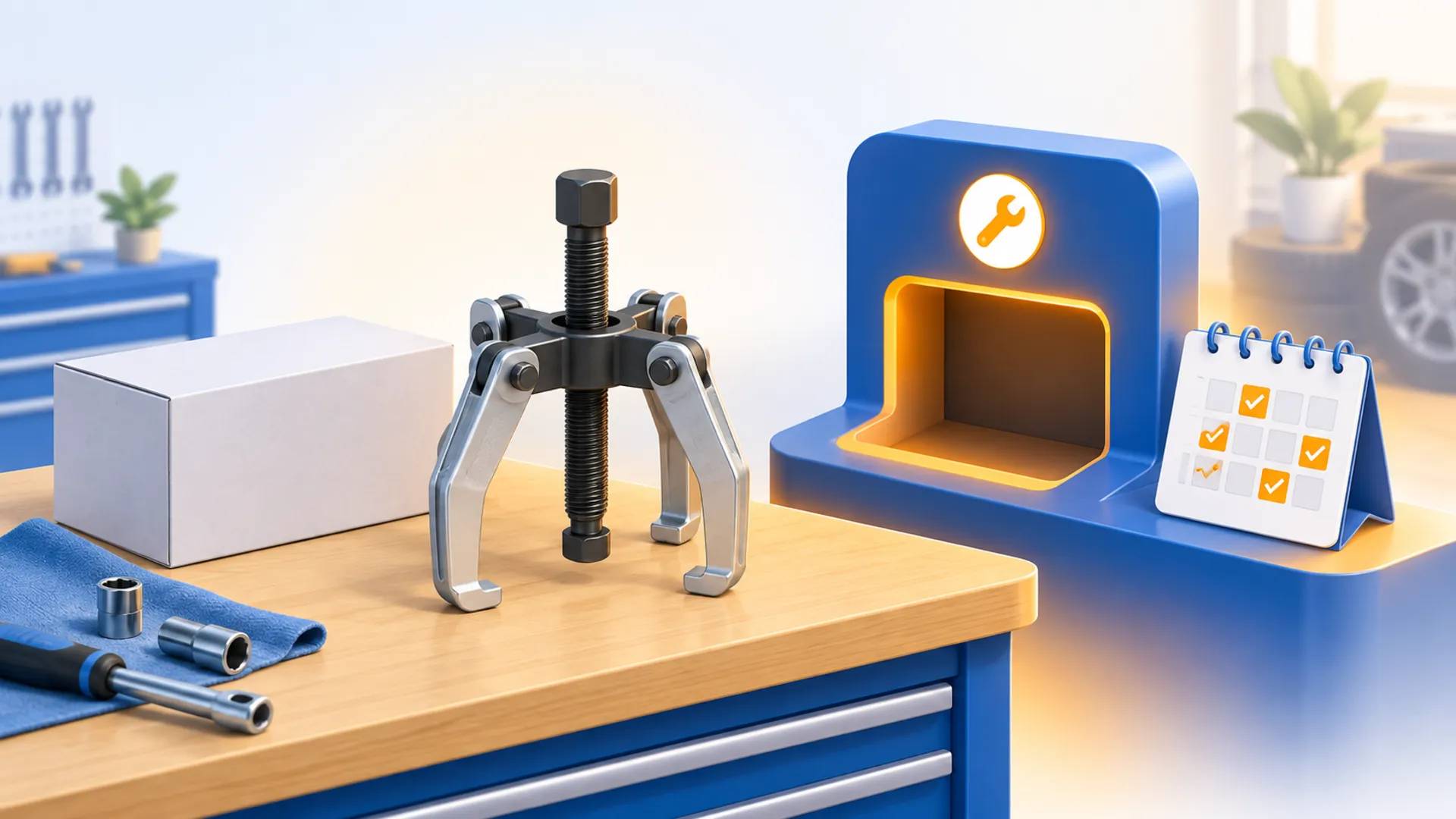
Every major parts chain lends exactly these tools for free against a refundable deposit. The brand's listings argued build quality with rival sellers the shopper had never been choosing between.
At a glance
- Category
- Tools & Equipment
- Marketplaces
- US
- Revenue at start
- $71k / month
- Products
- Specialty job-specific tools, $40–$190
- Engagement
- Creative & content + PPC
- Timeframe
- 6 months
Results
The challenge
A specialty automotive tool is bought for one job. In the United States the major parts chains lend exactly these tools for free against a deposit, which means the brand's listings were not losing to cheaper listings — they were losing to a shopper deciding they did not need to own one at all.
Nothing in the account addressed this. The copy compared the tool to other tools on build quality and warranty, an argument aimed at a competitor the shopper was not considering. Advertising made the problem more expensive: clicks were bought from people who then drove to a counter and borrowed the alternative, and the 51% ACoS was the price of that unacknowledged comparison.
Our approach
We wrote the listing to answer the question the shopper was actually asking.
- The buy-versus-borrow comparison made explicit — the deposit, the two trips, the wait when the tool is out and the condition a much-used loaner arrives in, written generically, because a listing cannot describe another retailer's offer.
- Repeat-use framing — each tool's copy names the other jobs it does, which is what converts a one-job rental into a purchase.
- Quality shown where it decides the job — close imagery of the contact surfaces that round off fasteners when a worn loaner is used.
- Search terms aimed at the decision moment, capturing the phrasing people use when weighing whether to buy or borrow a job-specific tool.
Inside the ad account
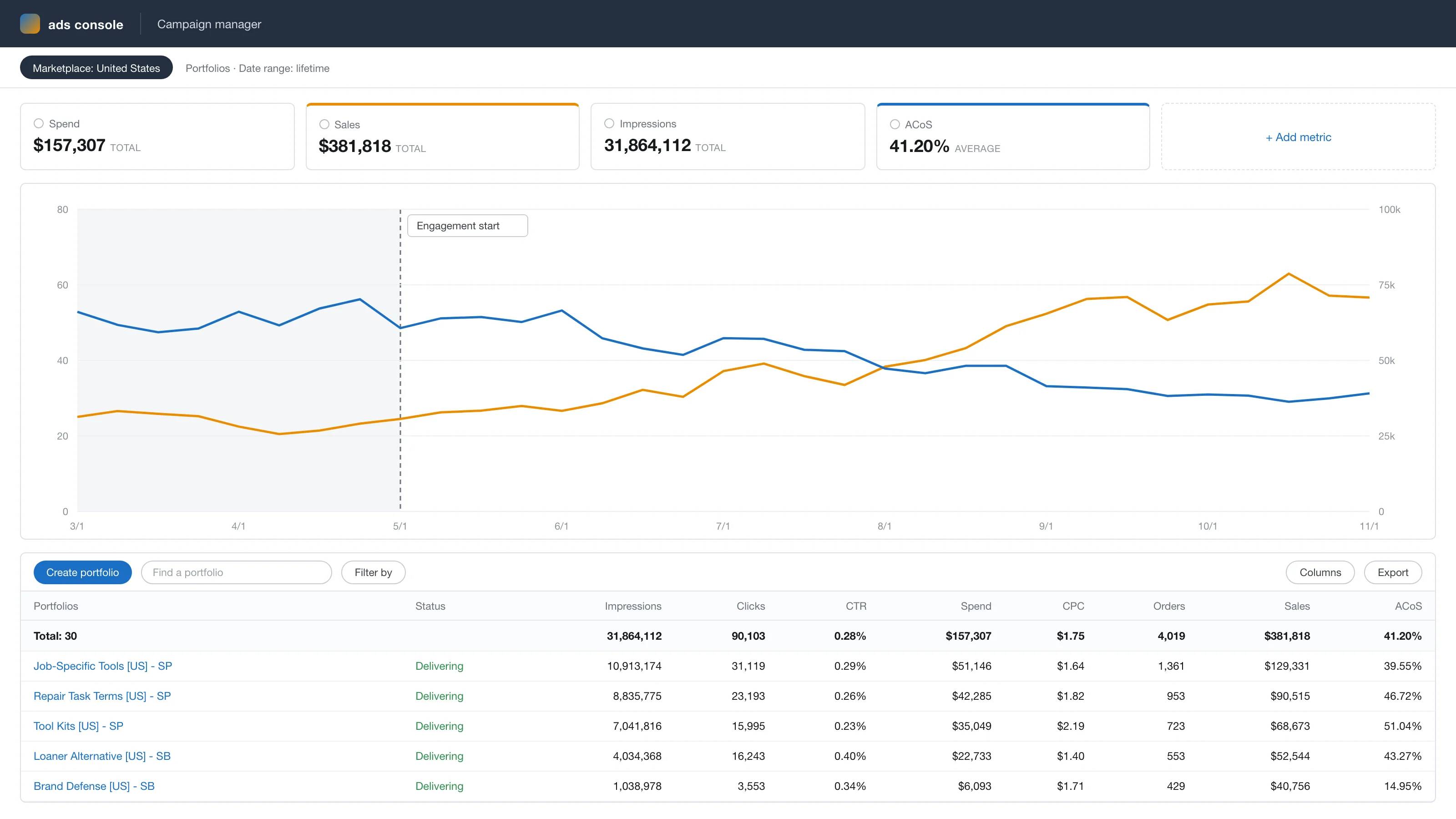
Anonymized account view, rebuilt from the figures reported above: ad sales growing from $32k to $72k a month while ACoS falls from 51% to 27% across the 6-month engagement.
The results
Conversion more than doubled, from 2.8% to 6.1%, and revenue grew 124% to $159k a month.
ACoS fell twenty-four points because the same paid traffic now converts rather than leaving to borrow. The most telling number is the rise in multi-tool orders from 7% to 24%: once the copy establishes that owning the tool is reasonable, the objection that governed the whole category stops applying to the second purchase.
“Our biggest competitor had no listing, no ads and no price. It was a counter at the end of the road.”
Services we delivered
Related case studies

Ready to scale your Amazon brand?
Talk to a senior strategist and leave with a growth plan for your store — no obligation.