
Splitting one universal listing into the machines people actually ride
+59% sessions
One product served motorcycles, ATVs, UTVs and snowmobiles, and was listed once, for all of them. It ranked properly for none of them.

At a glance
- Category
- Motorcycle & Powersports
- Marketplaces
- US, CA
- Revenue at start
- $143k / month
- Structure
- 18 products, each one universal listing
- Engagement
- Listing SEO + PPC
- Timeframe
- 14 months
Results
The challenge
Consolidating a product into one listing is normally the right instinct — reviews pool, sales history concentrates, ranking compounds. In powersports it broke down, because the four machine types this product serves have almost no shared vocabulary.
The universal listing tried to speak to all of them at once. Its title carried four applications and therefore emphasized none; its imagery showed a motorcycle, so ATV and snowmobile shoppers assumed it was not for them; and its copy read as a compromise. It ranked mid-page for everything and owned nothing, while specialist competitors with narrower products took the top of every application search.
Our approach
We deliberately reversed the consolidation, one application at a time.
- Application-specific listings created for the machine types with real independent search volume, rather than splitting everything on principle.
- Imagery rebuilt per application, since the fastest disqualifier in this category is a photograph of the wrong machine.
- Vocabulary matched to each community — the same component is described in genuinely different words by riders, quad owners and sled owners.
- Reviews preserved where permitted and rebuilt deliberately where not, with each new listing given a supported launch instead of being left to start cold.
Inside the ad account
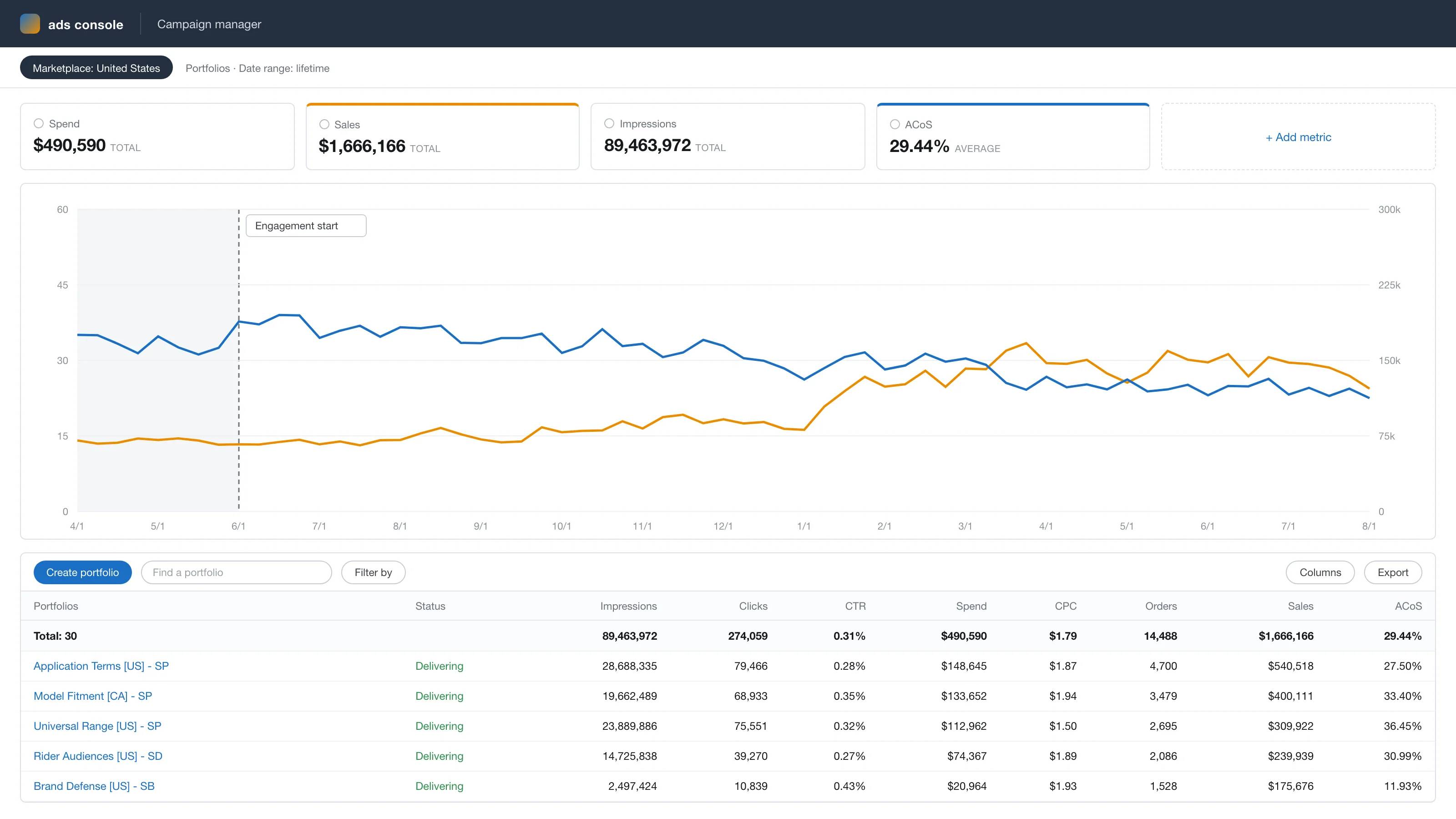
Anonymized account view, rebuilt from the figures reported above: ad sales growing from $64k to $155k a month while ACoS falls from 36% to 23% across the 14-month engagement.
The results
Sessions grew 59% and revenue 141%, with top-ten application rankings going from 4 to 46.
The trade was real and worth naming: splitting a listing scatters its review history, and three of the new listings spent four months below where the universal listing had been. By month nine every one of them was ahead. Consolidation is usually correct — it is wrong when the audiences behind the searches have nothing in common.
“The same part, four completely different customers. Making them share a page was costing us three of them.”
Services we delivered
Related case studies



Ready to scale your Amazon brand?
Talk to a senior strategist and leave with a growth plan for your store — no obligation.