Amazon DSP vs Sponsored Ads: Where Each Dollar Works Harder
Sponsored ads harvest demand that already exists; DSP creates and re-engages it. A side-by-side comparison, plus the account stage at which DSP starts to pay.
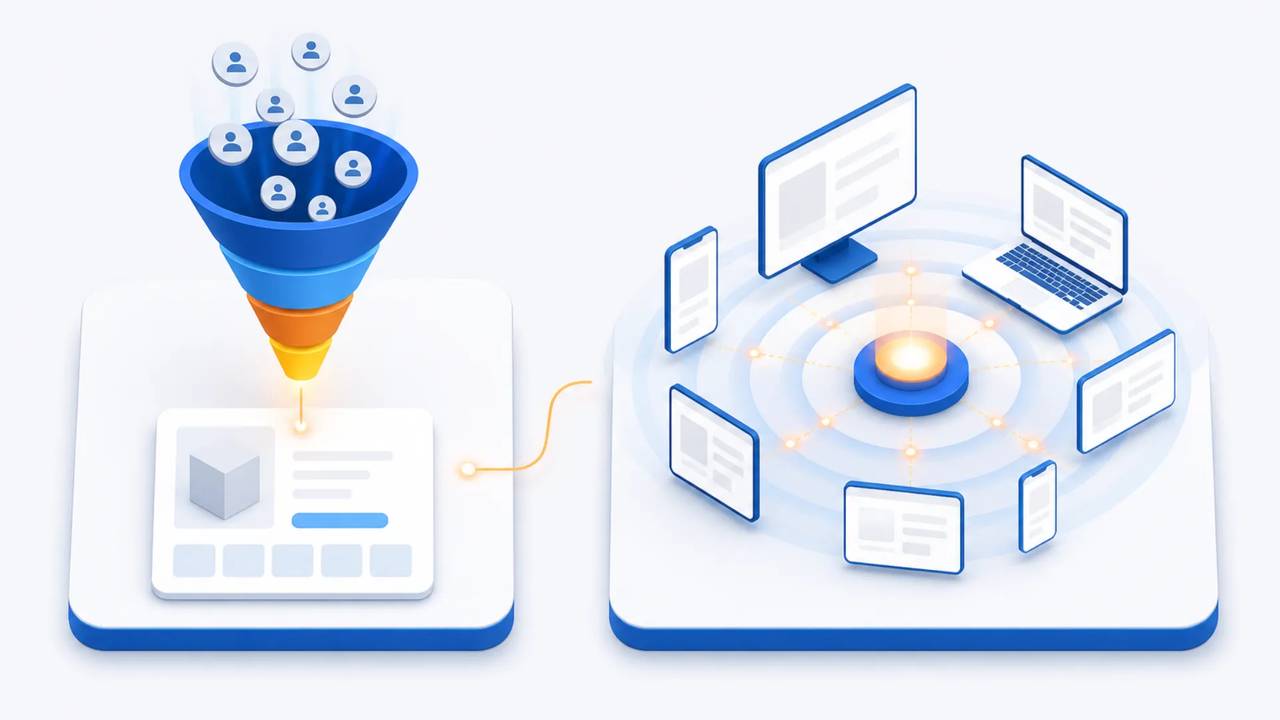

Amazon DSP vs Sponsored Ads is not a choice between two ad platforms — it is a choice between two jobs. Sponsored ads capture demand that already exists inside Amazon search: someone types a query, your ad competes for that click. Amazon DSP creates and re-engages demand away from the search bar, buying impressions across Amazon's owned properties and the open web using Amazon's shopping signals. They bill to the same P&L, but they answer different questions and should be judged on different numbers.
The two jobs, stated plainly
Sponsored Products, Sponsored Brands and Sponsored Display are harvest channels. They sit where purchase intent is already formed and take a share of it. Their ceiling is the size of the category's search volume plus your ability to win auctions inside it. If your brand is already visible on every relevant search term at a bid you can defend, more sponsored budget mostly buys the same demand at a worse price.
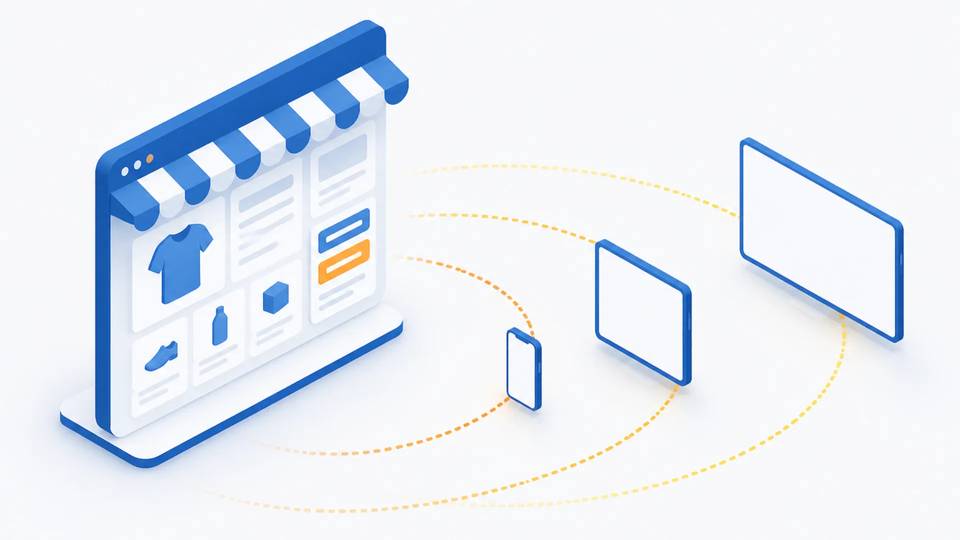
DSP is a reach and re-engagement channel. It reaches shoppers who have not searched yet, who viewed your detail page and left, or who bought once and are due to buy again — on Amazon.com, Prime Video, Fire TV and Twitch, and on third-party sites and apps bought through Amazon Publisher Direct and open exchanges. Its ceiling is the size of the audience you can define, not the size of the keyword pool.
That distinction is the whole article. The full mechanics of the platform are in Amazon DSP explained; the sponsored side is covered in Amazon PPC explained.
Amazon DSP vs Sponsored Ads: the comparison
| Dimension | Sponsored Ads (SP / SB / SD) | Amazon DSP |
|---|---|---|
| Buying model | Auction on keywords, ASINs and categories; mostly cost-per-click (Sponsored Display can also bill on viewable impressions) | Programmatic impression buying — real-time bidding, private marketplaces and programmatic guaranteed, priced on CPM |
| Access | Self-service in the Amazon Ads console; Sponsored Brands and Sponsored Display require Brand Registry | Self-service in the console or through a managed/agency seat; Amazon removed the self-serve minimum at unBoxed in November 2025 |
| Inventory | Amazon search results and detail pages; Sponsored Display also reaches select third-party sites, apps and connected TV | Amazon.com, Prime Video, Fire TV, Twitch, IMDb, plus Amazon Publisher Direct and third-party exchanges |
| Targeting input | What the shopper is doing right now — the query typed, the page viewed | Who the shopper is — in-market, lifestyle, remarketing, lookalike and custom audiences built on Amazon's first-party shopping and streaming signals |
| Creative | Formats fixed by the ad type: text plus image, headline, logo | Display and video creative you supply, including streaming TV |
| Primary metric | ACoS and ROAS per campaign, ad group and search term | Reach, frequency, detail page view rate, new-to-brand rate, branded search lift, then ROAS |
| Attribution | Click-led. Amazon's help documentation puts the standard Sponsored Products reporting column at 7 days and Sponsored Brands at 14, with other windows available in downloadable reports | View-led as well as click-led, which is why a 2026 attribution change hit it harder (below) |
| Best at | Defending share on terms with existing demand; converting bottom-funnel intent | Building consideration, re-engaging non-buyers, winning repeat purchase, reaching non-endemic-style audiences |
| Failure mode | Bidding harder on demand you already own | Buying impressions with no conversion signal behind them and calling it branding |
Sponsored Display is not "DSP lite" — this is the part people get wrong
Both buy display inventory. Both can run off Amazon. That is where the similarity stops, and the confusion is expensive: it leads brands to test Sponsored Display, see a modest result, and conclude DSP would do the same.
Sponsored Display is a self-service sponsored format with deliberately simple controls: contextual targeting (category, price, brand, rating, Prime eligibility), Amazon's pre-built audience segments, and remarketing to recent detail-page viewers. It bills on clicks or viewable impressions, reports in the same ACoS-shaped table as the rest of your PPC, and is managed by whoever manages your keywords.
Amazon DSP is a media-buying platform. You build audiences rather than pick from a shortlist, you control frequency, you buy streaming and video inventory Sponsored Display cannot reach, and you can query the result in Amazon Marketing Cloud. Its reporting speaks display language — reach, frequency, view-through, incrementality — not just cost of sale.
The practical test: if the campaign you want to run can be described as "show my ad to people looking at competitor products," that is Sponsored Display, and it belongs in the sponsored budget alongside the other formats we compare in Sponsored Products vs Sponsored Brands vs Sponsored Display. If it can only be described as "reach this audience, this often, in this environment, and measure what it did to purchases later," that is DSP.
Attribution: read the two channels on different clocks
Sponsored ads are judged on click-attributed sales inside a short window, which is why ACoS works as a daily steering metric there. DSP earns a meaningful share of its credit from views, and views are attributed on a different basis.
Amazon moved to a shopping-signal enhanced last-touch attribution model effective 1 January 2026: click attribution was left alone, while view credit is now applied only where shopping signals indicate genuine influence, with "all views" metrics kept available for historical comparison. The practical effect reported across the industry was lower view-through ROAS on Sponsored Display and DSP, with click-through numbers unchanged — a measurement change, not a performance change.
Two consequences. First, do not compare a DSP ROAS from 2025 with one from 2026 and treat the gap as a result. Second, hold DSP to a blended read: total ad cost of sales, branded search volume and new-to-brand rate over a quarter, not a last-click number over a week. We make that argument in more depth in TACoS on Amazon.
Where each dollar goes, by account stage
There is no universal split, but there is a defensible sequence.
Sponsored efficiency is unfinished. If wasted spend is still sitting in broad campaigns, negatives are thin, or the top search terms are not separated from discovery, every dollar belongs in sponsored ads. DSP does not fix a leaking funnel; it fills it faster. This is what an Amazon growth plan is for.
Sponsored is efficient but flat. Impression share on your core terms is high, ACoS is where you want it, and extra budget buys diminishing returns. This is the point where DSP starts to earn its place — usually beginning with remarketing to detail-page viewers and cart abandoners, the audience with the shortest path back to purchase.
Sponsored is efficient and you want category share. Now upper-funnel DSP audiences and streaming inventory make sense, funded as a growth line rather than out of the performance budget, and measured on new-to-brand and branded search rather than campaign ROAS.
On money: Amazon's managed DSP service is generally cited as starting around $50,000 per month, while the self-serve route has no Amazon-imposed floor since late 2025. Practitioners writing in 2026 put the practical working range for self-serve or agency-managed DSP at roughly $10,000–$15,000 a month — not because Amazon requires it, but because the bidding model needs enough conversion signal to optimize against. Below that, a Sponsored Display audience test usually tells you the same thing for less. Our approach to the platform is described on our Amazon DSP advertising page.
FAQ
Is Amazon DSP better than Sponsored Ads?
Neither is better; they do different jobs. Sponsored ads capture demand that already exists in Amazon search and are judged on ACoS. DSP builds and re-engages demand across Amazon properties and the open web and is judged on reach, new-to-brand rate and blended cost of sales. Most brands need sponsored ads working properly first.
Do I need Amazon DSP if I already run Sponsored Display?
Not until sponsored ads plateau. Sponsored Display covers basic remarketing and contextual placements with simple controls. DSP adds custom audience building, frequency control, streaming and video inventory, and clean-room analysis. Move when extra sponsored budget stops buying incremental sales rather than when a new channel sounds appealing.
What is the minimum budget for Amazon DSP?
Amazon removed the self-serve minimum at unBoxed in November 2025, so there is no platform-imposed floor; the managed service is generally cited as starting around $50,000 per month. Practitioners commonly suggest $10,000–$15,000 monthly for self-serve or agency-managed DSP, since the bidding model needs conversion volume to optimize.
How do I measure Amazon DSP against Sponsored Ads?
Use different clocks. Read sponsored ads on click-attributed ACoS week to week. Read DSP over a quarter on detail page view rate, new-to-brand rate, branded search volume and total ad cost of sales. Amazon Marketing Cloud lets you combine both data sets for cross-channel attribution.
What to do this week
Pull your sponsored search term report and check impression share on your top ten converting terms. If you are already winning them and spend is still climbing without incremental sales, you have a demand ceiling, and DSP is the next channel rather than a bigger bid. If you are not winning them, fix that first — a remarketing audience built on a leaking detail page just buys the leak more traffic.