
Sorting a chair range by hours in the seat, not by feature tier
Return rate 14% → 8%
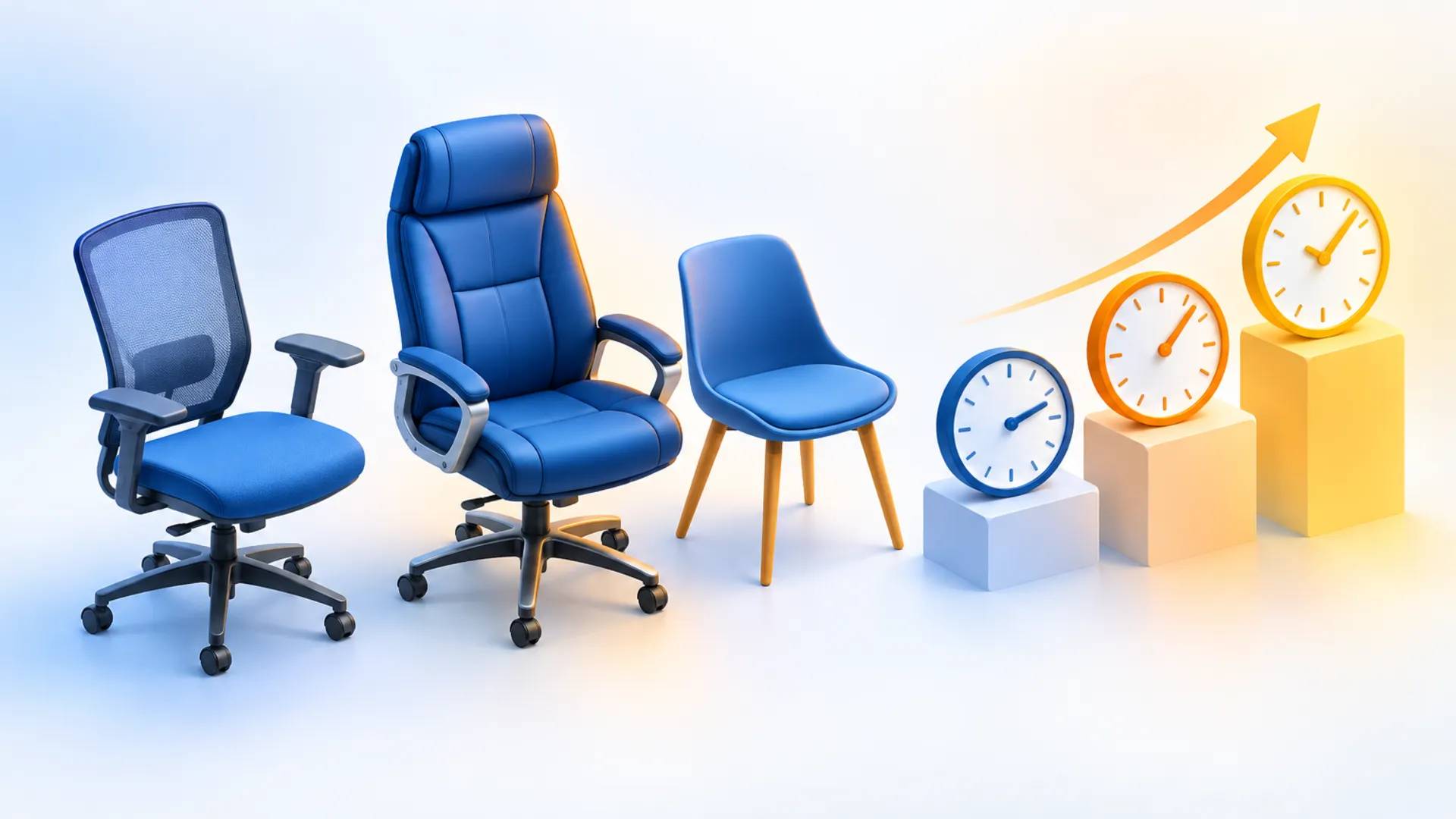
Five chairs sold as good, better and best, with each tier defined by how many adjustments it had. Shoppers were not choosing on adjustments — they were choosing on how long they sit down for.
At a glance
- Category
- Office Furniture & Ergonomics
- Marketplaces
- US, UK
- Revenue at start
- $302k / month
- Catalog
- 5 chairs, $180–$640
- Problem
- 14% returns, most of them 'uncomfortable'
- Engagement
- Creative & content + listing SEO
- Timeframe
- 11 months
Results
The challenge
The range was built the way manufacturers build ranges: an entry model, three steps up, and a flagship, with each step adding lumbar depth, armrest axes and a headrest. Every listing described its own adjustments in detail, and every listing therefore read as a longer version of the one below it.
Shoppers do not experience a chair as a count of adjustments. They experience it as a number of hours. Someone at a desk nine hours a day and someone who sits for ninety minutes in the evening need genuinely different products, and both were arriving on whichever listing the advertising put in front of them. The evidence was in the returns: fourteen percent came back, the stated reason was almost always comfort, and the pattern ran both directions — heavy users returning the entry chair as inadequate, and occasional users returning the flagship as overbuilt and overpriced.
Our approach
We re-sorted the range along the axis the customer actually uses.
- Each chair assigned an honest daily-hours band — two, four, six or eight-plus — decided from seat foam density, mechanism rating and warranty terms rather than from price.
- The hours band placed first in the title, in image frame one and at the top of A+, before any adjustment is mentioned.
- A range comparison built on hours, so a shopper who lands on the wrong chair is routed to the right one instead of bouncing to a competitor.
- Keyword work aligned to duration language — all-day, full-time, long hours, occasional use — which shoppers type far more often than mechanism names.
How we worked
- 1
Return reason coding
Nine months of returns read and categorized; the comfort complaints split cleanly into 'not enough chair' and 'too much chair'.
- 2
Assigning the bands
Each model tested against its own specification and warranty to place it in an hours band that could be defended.
- 3
Rebuilding frame one
Every hero image redone to state the use duration before anything else, since that is the fastest possible qualification.
- 4
Cross-routing the range
Comparison modules added to all five listings so a mismatch becomes a different purchase rather than a lost one.
- 5
Twelve-week watch
Returns tracked per model; the six-hour chair re-banded after its complaint pattern stayed high.
Inside the ad account
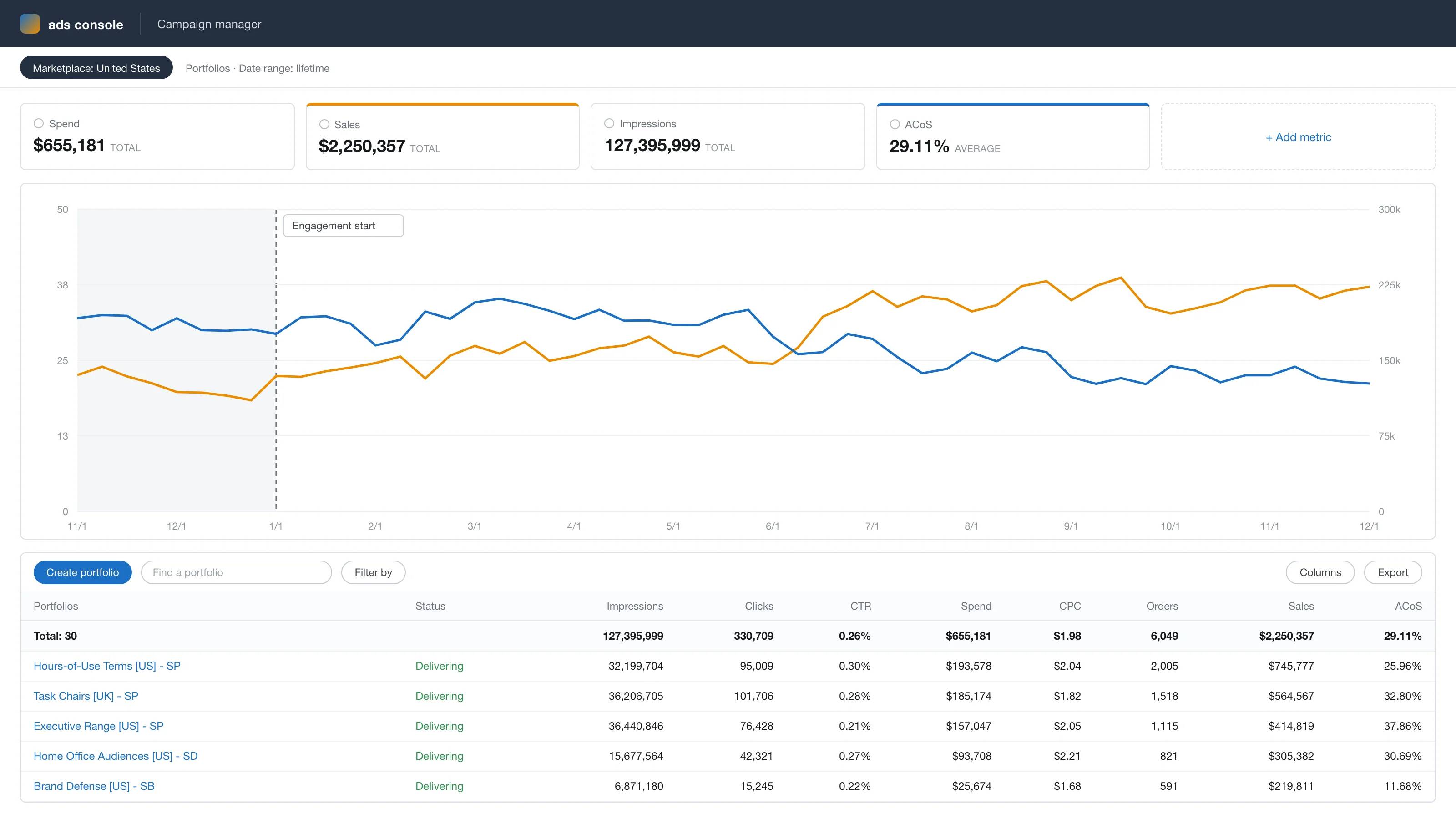
Anonymized account view, rebuilt from the figures reported above: ad sales growing from $136k to $220k a month while ACoS falls from 33% to 22% across the 11-month engagement.
The results
Returns fell from 14% to 8%, which in a category where a returned chair usually cannot be resold at full value goes almost entirely to the bottom line.
Net revenue rose 62% and the average selling price climbed 28% — not through a price rise, but because heavy users now identify themselves and buy the chair built for them instead of trying the cheap one first. The rating rose half a point for the same reason: most of the bad reviews had been written by people sitting in a chair that was never meant for their day.
“Our catalog was organized the way our factory thinks. Nobody has ever walked into a shop and asked for four more points of adjustment.”
Services we delivered
Related case studies




Ready to scale your Amazon brand?
Talk to a senior strategist and leave with a growth plan for your store — no obligation.