
Selling a $79 accessory to someone who just spent $499
Conversion 4.4% → 7.9%
A premium accessory brand kept losing to products a third of its price. The barrier was not the money — it was that the listing asked to be judged against other accessories instead of against the setup it improves.

At a glance
- Category
- Video Games
- Marketplaces
- US
- Revenue at start
- $147k / month
- Position
- $79 against $19–$29 alternatives
- Engagement
- Creative & content + DSP
- Timeframe
- 6 months
Results
The challenge
On a search results page the brand's accessory sits beside four cheaper ones, and the shopper's brain does the only comparison the page invites: $79 against $24. In that frame the product is three times too expensive and the decision takes two seconds.
The frame is wrong, though, and the brand knew it. This shopper owns a console and a display that together cost close to a thousand dollars, and the accessory is the part that determines whether all of that equipment performs. But nothing on the listing connected the product to the setup. It described its own features in isolation, which left the price to be judged in isolation too — and produced a second problem: a meaningful share of the people who did buy returned it, because they had bought on price curiosity rather than on understanding what it was for.
Our approach
We moved the comparison off the shelf and onto the shopper's own desk.
- The setup as the reference point — imagery showing the accessory in place within a full rig, with the cost stated as a share of equipment the shopper already owns.
- The bottleneck argument — content explaining what the cheap alternative limits, in the terms this audience already uses to evaluate hardware.
- Qualification before the click — creative that states plainly who the product is for, which is what stopped the curiosity purchases and the returns that followed.
- DSP audiences built from recent hardware buyers, reached in the weeks after a console or display purchase, when a setup upgrade is an obvious next thought rather than an interruption.
Inside the ad account
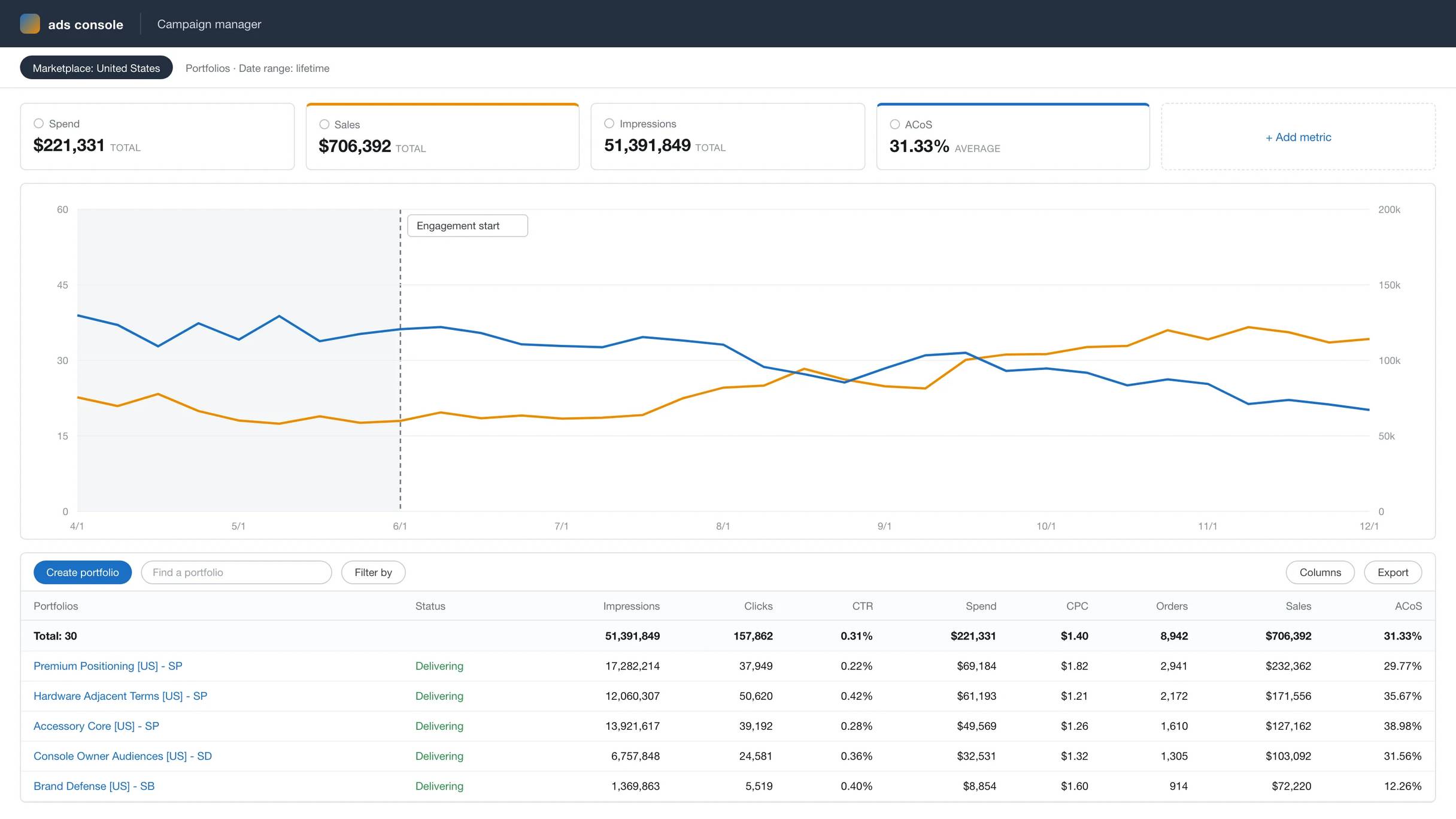
Anonymized account view, rebuilt from the figures reported above: ad sales growing from $66k to $121k a month while ACoS falls from 36% to 22% across the 6-month engagement.
The results
Conversion nearly doubled — 4.4% to 7.9% — with the price untouched at $79, and revenue rose 110% — conversion doing most of it and the new display audiences adding the rest.
The return rate more than halved at the same time, which is the same mechanism read from the other side: a listing that says clearly who the product is for sells to fewer of the wrong people. Three quarters of orders are now new-to-brand, because the DSP audiences reach shoppers at the one moment when an accessory upgrade is already on their mind.
“Nobody blinks at the console price. We were the only ones asking to be compared with the twenty-dollar shelf.”
Services we delivered
Related case studies




Ready to scale your Amazon brand?
Talk to a senior strategist and leave with a growth plan for your store — no obligation.